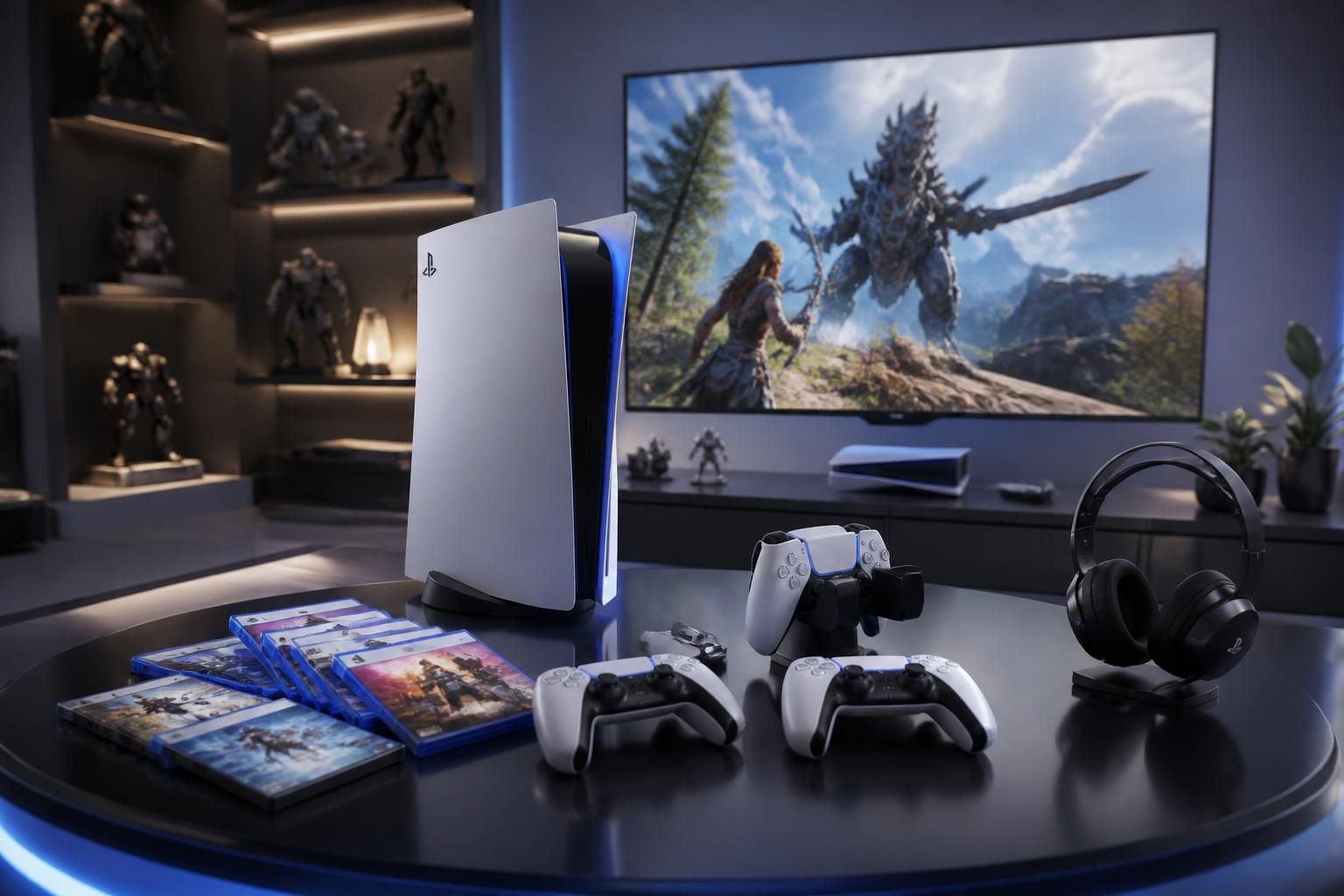
When a brand spans generations without losing its aura, there is rarely any chance behind the curtain. With PlayStation, Sony has built much more than a console: a universe, appointments, almost affectionate purchasing reflexes. The Marketing mix of the brand is based on a very fine balance between Product innovation, controlled Price, agile Distribution and ultra-consistent Promotion. And it is precisely this multi-layered Strategy that feeds its Success, even in a fiercely competitive video game market.
The article in brief
PlayStation does not impose itself only through its consoles. Sony orchestrates a complete ecosystem where each marketing mix lever strengthens the others, with a very clear logic of perceived value, exclusivities, and loyalty.
- An assumed premium identity: The brand first sells a promise of a high-end experience
- Exclusivities that make a difference: Strong licenses drive the console purchase
- A very flexible sales network: Stores, e-commerce, and digital Store complement each other
- Communication that creates desire: Sony mixes events, social, and community
Behind PlayStation’s success, there is a precise, inspiring, and remarkably effective marketing mechanism.
To be completely transparent, what strikes with PlayStation is coherence. Nothing is left to chance: the hardware attracts, exclusive games hold attention, services extend the experience, and communication transforms all that into concrete desire. In a sector where the global console market weighs heavily, Sony has understood that being technically efficient is not enough; it must also be desirable, accessible at the right time, and impossible to forget.
This logic somewhat recalls brands that seem to speak to the whole family without ever forcing the trait. You buy a console, then a subscription, then a game, then an accessory, and without realizing it, you enter a complete ecosystem. At that precise moment, one understands that the Marketing Mix does not only serve to sell, but to establish a lasting habit. This is where Sony gained a lead.
The PlayStation marketing mix, a mechanism designed as an ecosystem
The 4P framework remains a solid base to understand PlayStation’s success. Product, price, place, and promotion do not work here as four separate boxes, but as levers that respond to each other. Sony has developed a Strategy where every choice strengthens the brand’s overall perception, from the console’s design to the smallest launch visual.
What makes the whole particularly effective is the adaptation to current usages. Players navigate between physical consoles, digital purchases, subscriptions, and community content. PlayStation understood very early that the customer journey no longer resembles a simple checkout, but a series of connected experiences, almost as if the living room, mobile, and web shared the same language.
A product designed to create desire and loyalty
At Sony, the Product is not limited to the machine. The PS5 made a mark with high-end components, a very fast SSD, advanced graphics capabilities, and a DualSense controller that redefined immersion. Honestly, when a brand manages to make a haptic trigger speak like a heartfelt argument, it means they worked well on their story.
But the real strength is the game library. Licenses like God of War, The Last of Us, Spider-Man, or Gran Turismo create an emotional anticipation that goes beyond a simple hardware purchase. You don’t just buy a console; you enter a universe. It’s a bit like a collection of novels you don’t want to leave before reading the entire saga.
The rise in power of PlayStation Plus also transformed the product promise into recurring revenue. The Essential, Extra, and Premium plans cater to different profiles, from the occasional player to the passionate who wants to explore everything. This shift towards subscription shows that a brand can evolve without losing its DNA.
A premium price, but never disconnected from reality
The Price adopted by Sony relies on a simple idea: if the experience seems superior, the pricing can remain high. At launch, the standard PS5 was positioned at $499, with a digital version at $399. This choice gives a premium image while keeping a softer entry door for some households.
Honestly, this logic works because it avoids the race to the cheapest price. Sony prefers to defend perceived value rather than enter a permanent discounting race. And let’s be honest, in the gaming world as in many other markets, price also tells a story: that of status, trust, and fulfilled promise.
Promotions remain occasional and strategic. Bundles, seasonal discounts, trade-in offers, subscription discounts: everything is designed to stimulate purchases without damaging brand image. The nuance is important because a console too often discounted quickly loses its prestige. Here, Sony plays the card of controlled scarcity, not clearance.
PlayStation Distribution: a presence wherever players buy
Distribution is undoubtedly one of the smartest points of the Sony model. PlayStation is available via PlayStation Direct, large specialized retailers, marketplaces, and regional resellers. This multichannel presence makes it possible to reach very different profiles, from the hurried parent who orders online to the enthusiast who likes to see the console on shelves before deciding.
Physical stores also play a very concrete role. Demo stations allow testing the controller, feeling the system’s responsiveness, and comparing sensations. In a market where purchases are often based on reputation, this direct contact remains a powerful trigger. A five-minute trial can sometimes be worth more than a long commercial.
Digital, however, has taken a central place. The PlayStation Store acts as a permanent showcase, but also as a conversion engine. Recommendations, targeted promotions, and immediate access to content strengthen continuous use. And here appears a real loyalty lever: the simpler the ecosystem, the longer the user stays.
To illustrate this logic, a comparison with other gaming universes is enlightening. A franchise like the console legacy around Sonic at Sega clearly shows that a strong license can create attachment, but PlayStation took the idea further by linking the console, services, and catalog into a single coherent experience.
| Lever | Application at PlayStation | Effect on the consumer |
|---|---|---|
| Product | High-performance console, exclusive games, integrated services | High perceived value and lasting attachment |
| Price | Premium pricing with targeted offers | Sense of quality without trivializing the brand |
| Distribution | Physical, digital channels, and partners | Purchase made easy at every step of the journey |
| Promotion | Campaigns, influence, events, social media | Strong visibility and desire maintained over time |
Promotion and communication: Sony turns gaming into an event
Promotion at PlayStation does not just announce a console. It creates anticipation. Sony combines TV commercials, digital campaigns, social networks, influencers, and major gaming events to install a feeling of urgency and prestige. Result: every announcement feels like a long-awaited moment, almost like a cultural release.
Collaborations with content creators are particularly effective. Where a traditional ad might seem bland, a streamer testing a game live brings immediate social proof. The audience sees the console at work, unfiltered, in a familiar atmosphere. It is often much more convincing than an overly polished speech.
PlayStation also bets on its own content: YouTube videos, developer interviews, gameplay demos, exclusive clips. This strategy feeds curiosity and provides material to communities. Meanwhile, major shows like Gamescom or Tokyo Game Show amplify the reach of announcements. A well-orchestrated launch can then create a global conversation in a few hours.
Digital, a discreet but decisive engine of success
Sony’s digital marketing relies on the fine use of data from PlayStation Network. This allows sending more relevant, better-targeted, and above all more useful messages for the user. An adventure player does not need the same content as a fan of car simulation. Simple on paper, but formidable in practice.
Email campaigns, programmatic advertising, SEO, and social interactions compose a continuous presence. The brand does not only speak at the time of a game release; it accompanies usages, desires, and even hesitations. This is what transforms visibility into durable relationship.
To extend this ecosystem logic, partnerships with telecom operators or entertainment platforms also play a key role. They install PlayStation into daily life, somewhat like a family habit unnoticed but structuring the evening. And let’s admit it, a brand that knows how to stay present without being intrusive has already won a lot.
In the same spirit of universe building, an article on how to create and manage a mini-city helps to understand this principle: when every element of a system answers to the others, the whole becomes stronger than the sum of its parts. PlayStation applies exactly this logic on a large scale.
The concrete levers explaining player loyalty
Sony’s success does not rely only on the initial sale. It depends on the ability to maintain engagement over time. Trophies, challenges, seasonal events, member-exclusive offers, and bonus content maintain an active relationship with the user. Over time, the console almost becomes a digital living space.
- Strong exclusivities: they give a clear reason to choose PlayStation.
- Subscription services: they extend the relationship beyond the purchase.
- Active community: it turns players into spontaneous ambassadors.
- Consistent experience: from the living room to the Store, everything remains smooth and recognizable.
This loyalty is precious because it reduces sensitivity to competition. When a brand manages to create habits, it goes beyond the simple product. The player no longer compares only technical features; he compares an atmosphere, a catalog, memories. And that is much harder to copy.
Let’s be honest, this is often where brands part ways: those who sell an object, and those who build a world. PlayStation clearly belongs to the second category, with a mastered Marketing that serves as an example far beyond video games.
Why is PlayStation’s marketing mix so effective?
Because Sony aligns product, price, distribution, and promotion within the same ecosystem logic. Each lever reinforces the others, which increases both desirability and loyalty.
What differentiates the PlayStation product from its competitors?
Strong exclusivities, innovations like the DualSense, and the integration of services like PlayStation Plus create a more complete and emotional experience.
How does Sony manage price without weakening its brand?
Sony favors a premium positioning and then uses targeted promotions, bundles, and subscription offers to boost sales without trivializing the console.
What role does distribution play in PlayStation’s success?
The brand combines direct sales, specialized stores, e-commerce, and digital Store to maximize availability and simplify purchase according to each player’s habits.