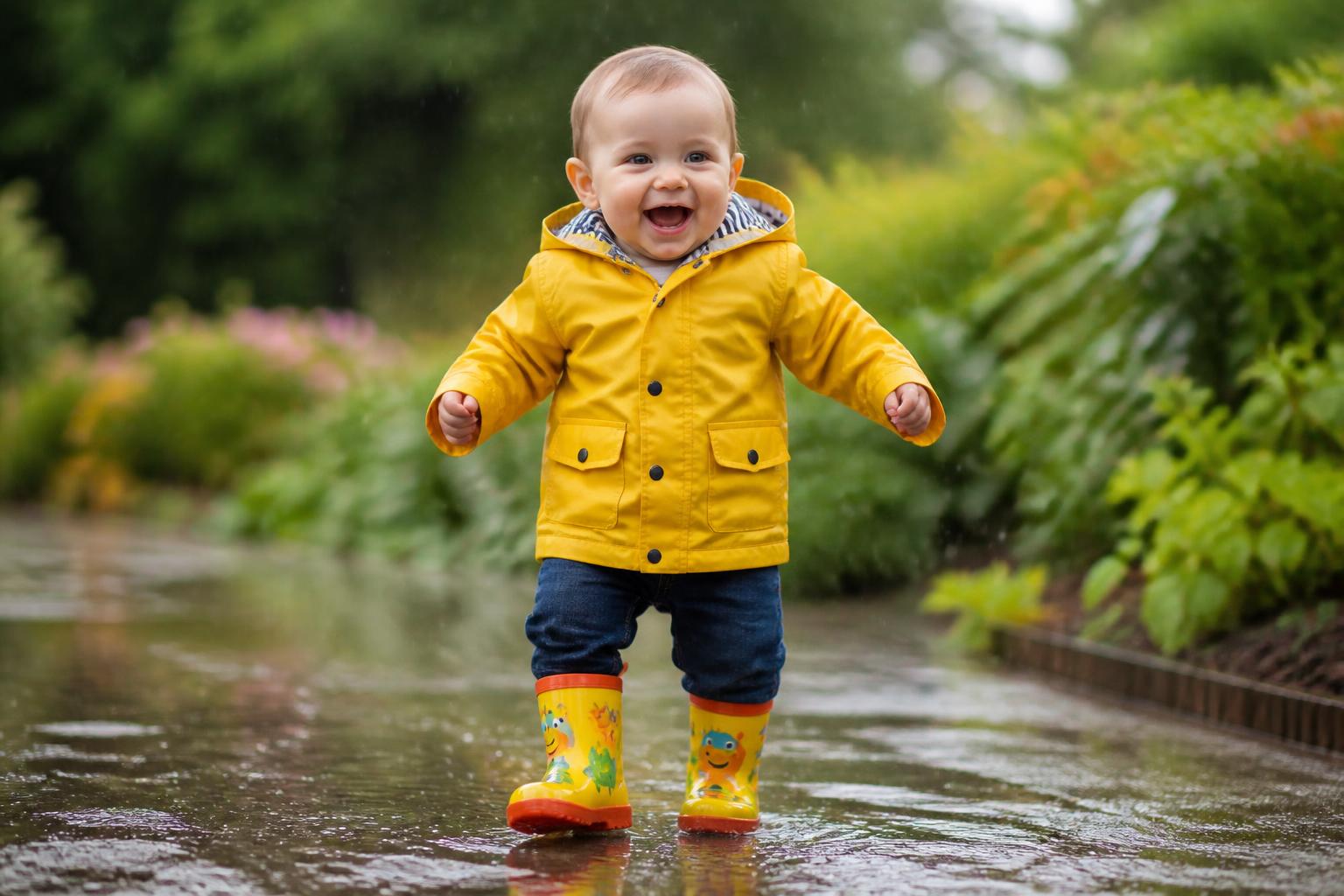
Choosing a baby rain boot means anticipating a delicate balance between comfort, safety, and functionality to accompany toddlers in discovering the outside world, even in the rain. This key step, both practical and emotional, requires special attention: the size must be perfect, the material waterproof yet flexible, and the sole non-slip. Between matching models for the whole family and ecological innovations, this article offers a detailed guide to finding the ideal pair that will make first steps rhyme with happy little adventures.
The article in brief
Discover how to combine protection, comfort, and style in the ideal baby rain boot, essential for their first steps in the rain.
- Precise measurement: measure the foot with the appropriate sock for a perfect fit
- Suitable materials: between natural rubber, PVC, and plant-based alternatives, choose waterproofing and flexibility
- Comfort & Safety: non-slip sole, effective support, and ease of putting on to support mobility
- Choice according to the season: favor warm lining for winter and lightweight models for milder periods
A well-chosen boot is the true first ally of baby’s rainy explorations, to move forward with confidence.
How to choose the ideal rain boot to accompany baby’s first steps ?
The first walks in the rain can quickly become a source of smiles and unforgettable memories if baby wears a suitable boot. To not hinder their naturally somewhat hesitant movements, the boot must combine full protection against moisture with freedom of movement. Boots by Aigle, for example, meet this need by offering a design tailored to the delicate morphology of baby’s feet, while maintaining the robustness of an adult product, a guarantee of durability.
The secret lies in a flexible sole that follows the natural roll of the foot while the child discovers balance. A wide opening and a well-thought-out closure facilitate dressing, a detail not to be overlooked for little ones eager to get outside. Choosing the right size is equally crucial: allowing about one centimeter of space in front of the toes avoids rubbing and accommodates even thick socks in winter.
Measuring the foot: a often underestimated step
A simple gesture, but oh so decisive: carefully measuring baby’s foot ensures that the chosen boot preserves their comfort and safety. Ideally, this operation should be done while the child is standing, wearing summer or winter socks depending on the season. Marking the foot’s extremities with a pencil, then comparing with the size guides offered by brands, avoids unpleasant surprises often experienced during online purchases.
Regularity is also necessary: toddlers’ rapid growth requires renewing this measurement every two to three months, or even more frequently if baby shows discomfort or difficulty in walking.
Composition and materials: which choice to prioritize to ensure waterproofing and comfort?
Traditional natural rubber models remain the standard, offering excellent waterproofing and exceptional durability. Their flexibility promotes good foot roll, essential for motor skills. At the same time, PVC boots are increasingly appealing thanks to their lightness and a varied color palette – a plus for awakening aesthetic sense from an early age.
The very latest arrivals on the market are made from bio-sourced or vegan materials, aiming to combine ethical trends and performance. These innovative alternatives often guarantee very good waterproofing while combining respect for the planet and comfort, a double win for aware parents.
| Material | Waterproofing | Flexibility | Durability | Maintenance |
|---|---|---|---|---|
| Natural rubber | Excellent | Very good | Medium | Easy (clear water, mild soap) |
| PVC | Good | Good | Good | Easy (clear water, natural drying) |
| Bio / vegan materials | Variable | Excellent | Variable | To check depending on the model |
Safety and ergonomics: inseparable criteria for the first steps
The issue is not limited to comfort: a baby boot must also ensure stability and reduce the risk of falling. For this, a non-slip sole, often with deep grooves, is a true guarantee of safety, even on wet or slippery surfaces such as damp sidewalks or park paddling pools.
Even more, ease of putting on is essential to encourage autonomy while avoiding the daily struggle of dressing. Models equipped with wide openings and ergonomic tabs greatly facilitate handling by toddlers, who can finally gain a few precious seconds to run faster outside.
Adapting the boot to the climate: choosing the right lining and type for each season
Winter use requires a lined model, with reinforced insulation to preserve the warmth of little feet, while spring or autumn often settle for a less thick boot, favoring lightness and breathability. Some models are even designed with removable linings, practical to adjust according to the weather without multiplying pairs.
In summer, it is advisable to opt for waterproof but thin boots, sufficiently breathable to avoid excessive sweating, an element that parents carefully observe to preserve baby’s well-being.
List of essentials for choosing the perfect rain boot for baby
- Regular measurements to monitor rapid growth
- Material choice according to season and comfort needs
- Check on putting-on systems to foster autonomy
- Non-slip sole to ensure safety on slippery surfaces
- Appropriate lining for the season, warm or light
- Simple and regular maintenance to extend boot life
FAQ: Key questions about baby rain boots
How to know if the rain boot is the right size for baby ?
The boot should leave about one centimeter of space in front of the toes, without the foot slipping or being compressed. The toes must be able to move freely and the heel remain stable while walking.
Which material to favor to avoid excessive sweating ?
Natural rubber is the most breathable material among waterproof ones. Choosing a removable insole and adapting socks to the season helps limit sweating and bad odors.
Is it safe to buy one size larger ?
It is not recommended to take a size that is too large. Poor support increases the risk of falls and hinders mobility. It is better to measure precisely and choose the size adapted with the appropriate sock.
How to maintain and dry baby rain boots effectively ?
Rinse with clean water, remove insoles, insert newspaper inside, and let dry in the open air, away from any heat source. This method prevents deformations and unpleasant odors.
How often to check baby’s shoe size ?
Rapid growth requires measuring feet every two to three months, or as soon as baby seems uncomfortable or their gait changes.