Urinary leaks affect many people, especially women, and often remain a delicate topic to discuss. However, they are not inevitable. The secret to regaining control? Targeted muscle strengthening of the pelvic floor. This discreet yet essential muscle group supports the pelvic organs and plays a key role in bladder management. Adapted, regular, and progressive pelvic floor movements make all the difference in preventing these small embarrassing leaks or reducing them, while improving pelvic health on a daily basis.
The article in brief
Strengthening your pelvic floor with appropriate exercises is the key to regaining confidence and effectively preventing urinary leaks.
- Targeted muscle training: favor Kegel exercises to tone the pelvic floor
- Holistic approach: combine diaphragmatic breathing and pelvic movements
- Use of accessories: incorporate tools like the Emy probe for a fun monitoring experience
- Regular practice: a 10-15 minute routine several times a week for visible results
A strengthened pelvic floor means a calmer daily life and lasting intimate well-being.
Understanding the pelvic floor and its importance in preventing urinary leaks
The pelvic floor, this group of muscles located at the base of the pelvis, plays a fundamental role. By supporting the bladder, uterus, and rectum, it balances internal pressures and controls the urge to urinate. When it relaxes—whether after pregnancy, with age, or due to factors like overweight or smoking—its role diminishes and leaks can occur, often during exertion or sneezing.
However, this relaxation is not inevitable. Provided the right pelvic floor exercises are practiced, it is possible to strengthen these muscles and regain satisfactory bladder control. This approach also helps prevent prolapse, a common disorder in women after 45 years old.
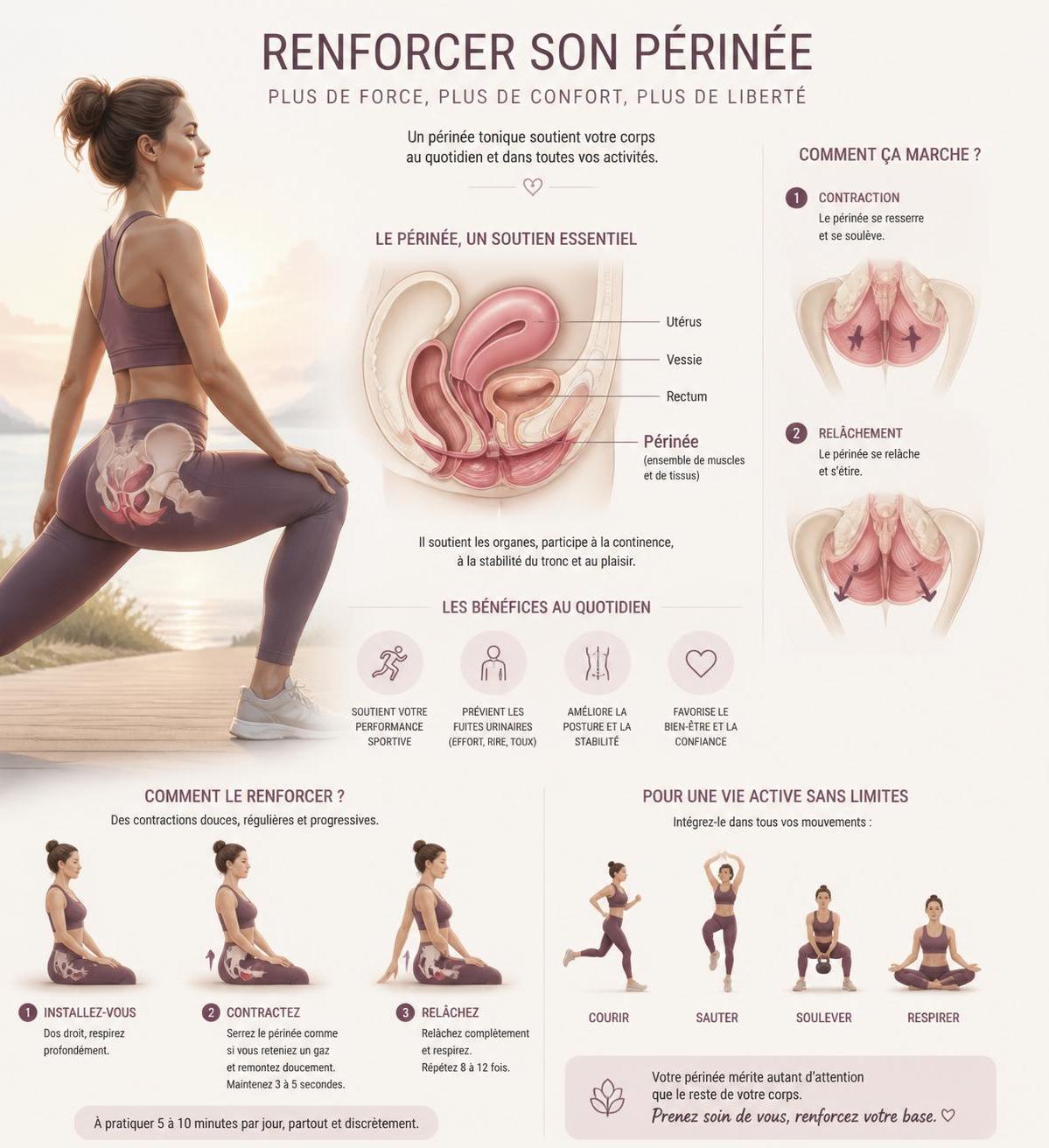
Kegel exercises: the essential foundation to strengthening your pelvic floor
The exercises developed by Arnold Kegel remain the most recommended method to precisely target the muscles of the pelvic floor. They consist of voluntary contractions followed by relaxations, to be performed lying down or sitting. By visualizing the action as if holding back a urine stream, the muscle is deeply engaged.
With regular practice, the strength and endurance of the pelvic floor increase, improving muscle tone and helping reduce leaks. This simple movement is perfectly accessible, even after childbirth or approaching menopause.
Beyond Kegel: incorporating breathing and posture for complete strengthening
To go further, diaphragmatic breathing synchronized with pelvic floor contraction proves to be a valuable ally. When exhaling, the pelvic floor contracts gently, reinforcing the natural support of the pelvic organs. Combined with core strengthening, notably through the bridge movement (lifting the pelvis) and plank exercises, this approach globalizes the muscle toning of the body’s center.
These combined exercises provide complete strengthening that helps stabilize not only the pelvic floor but also the deep abdominal muscles, essential for good pelvic support and effective prevention of urinary leaks.
Accessories to support practice and improve regularity
When muscles are difficult to locate or motivation is lacking, certain tools can make a difference. Geisha balls, for example, require the pelvic floor to maintain a passive hold that keeps its tone over time.
More high-tech, the pelvic probe Emy offers an interactive experience. Connected to a mobile app, it turns exercises into engaging mini-games, measuring your progress in real time through a biofeedback system. This innovation helps stay motivated by making muscle strengthening fun and accessible at home.
Practical advice: integrating exercises into your daily life without pressure
| Key advice | Daily tip |
|---|---|
| Practice 3 to 5 times per week | For example, during your reading breaks or before sleeping |
| Session duration: 10-15 minutes | The timing doesn’t matter, consistency is essential |
| Combine static and dynamic exercises | Alternate quick and long contractions for comprehensive strengthening |
| Do not force or hold your breath | Breathe deeply, timing each contraction with a slow exhalation |
Which pelvic floor exercises to prioritize for starting?
Simple Kegel exercises are ideal for starting, lying down, with progressive contractions from 5 to 10 seconds.
Can I practice these exercises after childbirth?
Yes, it is recommended to wait for your healthcare professional’s green light, then gradually resume with progressive movements.
How do I know if I am doing the contractions correctly?
Using accessories like the Emy probe or consulting a midwife can help better locate the targeted muscles.
How often should I practice?
3 to 5 sessions per week, about 10-15 minutes each, are advised to obtain visible results.
Is it effective after menopause?
Yes, pelvic floor rehabilitation is suitable at any age and can prevent or improve symptoms even in menopausal women.