

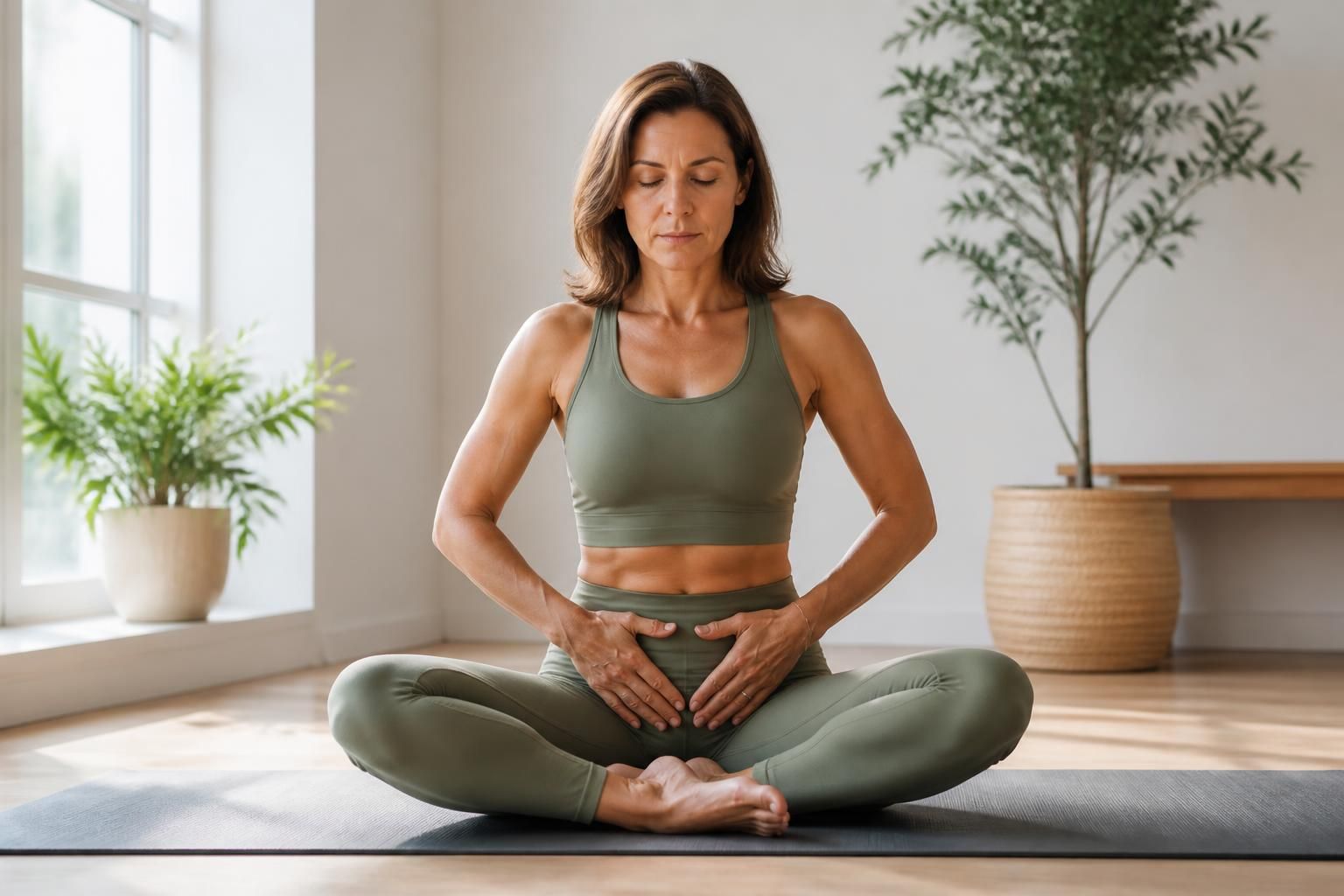
The perineum, this discreet muscle at the heart of our body, deserves all our attention, especially in women. Often put to the test during pregnancy, childbirth, or simply with age, it plays an essential role in pelvic health and intimate well-being. Simple and accessible gestures can effectively strengthen it, offering indispensable muscular support to prevent incontinence, avoid organ prolapse, and improve quality of life on a daily basis. Integrating these exercises into your routine is a true boost of confidence and comfort.
The article in brief
Strengthening your perineum means preserving your pelvic health with simple gestures to practice daily. These exercises also improve intimate well-being without complication.
- Why strengthen your perineum: They support pelvic organs and prevent urinary leaks.
- Key exercises to adopt: Targeted contractions, breathing, and use of suitable accessories.
- Fragilizing situations: Pregnancy, menopause, constipation, and excessive sports practice.
- Postpartum rehabilitation: Essential to restore tonicity and avoid discomforts.
These practices offer a gentle and accessible solution to cultivate lasting intimate well-being.
The female perineum: a key muscle for pelvic health
Sometimes overlooked symbol of the female body, the perineum is nevertheless a key element. This muscular hammock, located at the bottom of the pelvis, supports the bladder, uterus, and rectum. It acts as a true base, holding these organs in place and ensuring their proper functioning. In women, it must absorb the pressure of the uterus’s weight, even more intensified during pregnancy. This muscular support role influences urinary and digestive continence, but also intimate pleasure.
A weakened perineum often manifests as urinary leaks, a feeling of heaviness in the lower abdomen, or prolonged discomfort when sitting. Taking care of this muscle therefore means preventing these bothersome problems while promoting a stable posture and a harmonious internal environment. For this, a few simple gestures are enough to establish effective strengthening over time.
Simple gestures to feel and contract your perineum
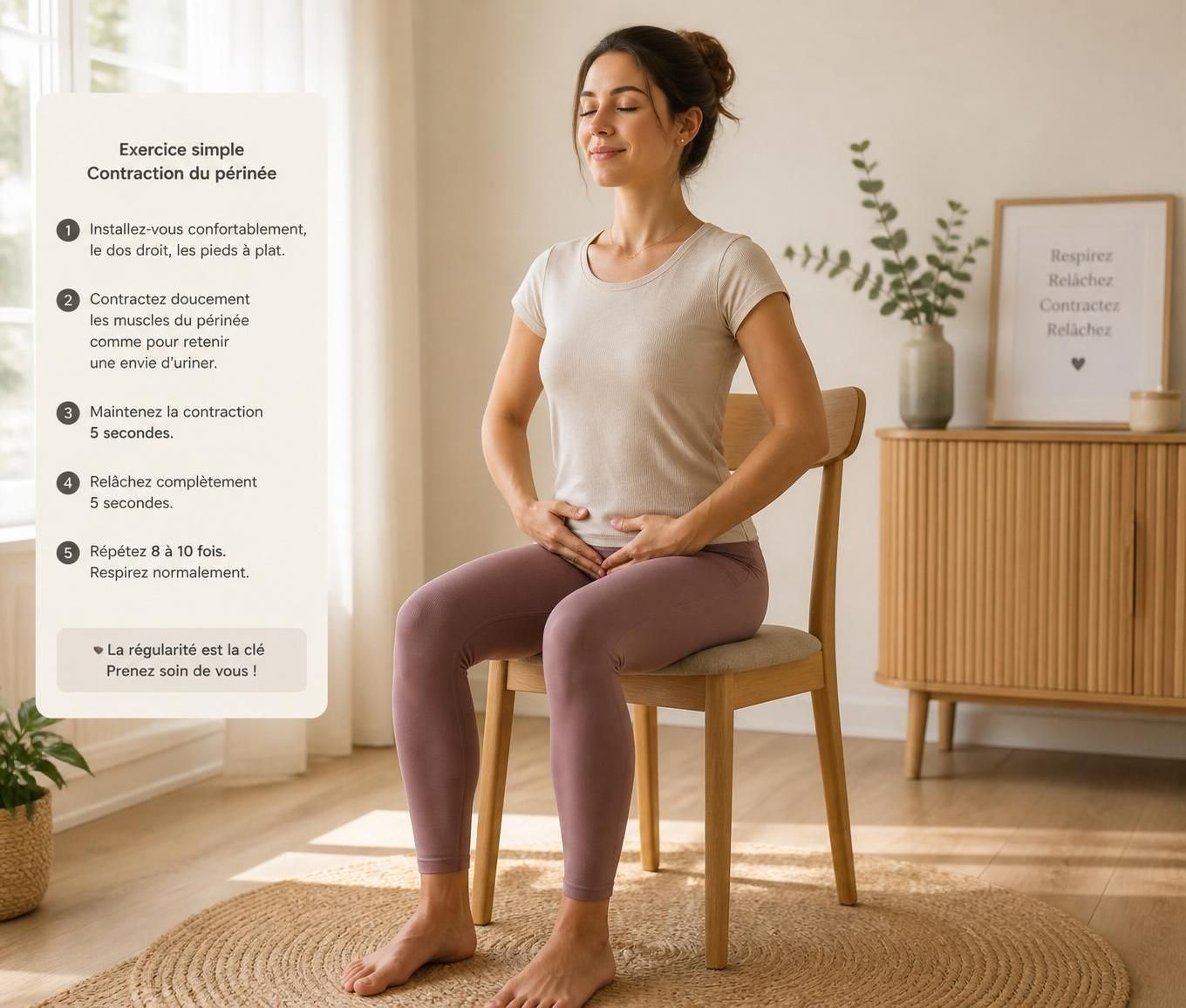
Often, the first step is just learning to feel this sometimes forgotten muscle. In a seated position, just imagine stopping a urine stream or preventing a gas — this gentle contraction focuses between the pubis and the coccyx. Hold this contraction for 5 seconds, then release, and repeat about ten times, it’s already a welcome session. And the best part is that this female perineum exercise fits everywhere: at work or at home.
Lying down, you can take the mind-body connection further. Breathe in calmly, then exhale while contracting the perineum and pulling in the belly, briefly hold your breath to maximize the contraction. Then relax, and repeat two to three times. This technique allows deep work thanks to synchronization with breathing.
Complementary exercises to effectively strengthen your pelvic floor
Adopting a varied routine is a key to success. Here are some recommended exercises for regular and effective perineum strengthening:
- The perineal elevator: Gradually contract your perineum like an elevator going up several floors, then slowly descend while releasing.
- Using a ball: Lying down, squeeze a ball between your knees while contracting the perineum on the exhale, thereby strengthening pelvic stability.
- The stabilized hands-and-knees: On hands and knees, back straight, contract the perineum while exhaling and pulling in the lower belly, hold then release.
These movements, besides improving muscular tonicity, also encourage better overall posture. Consistency, even if brief, allows you to observe concrete results within a few weeks.
Factors weakening the perineum to watch out for
Several life situations put the perineum to the test. Pregnancy, with the baby’s weight, greatly increases pressure on the pelvic floor. Overweight, chronic constipation, and certain impact sports worsen this effect, as do smoking or menopause which reduces muscle elasticity.
Excessive hydration can also weigh on an already weakened perineum, especially if one often exceeds two liters of water per day. Being aware of these factors helps adapt daily gestures to protect this precious muscle.
Postpartum rehabilitation: a recommended step
After birth, the perineum often needs help to regain strength. Perineal rehabilitation, prescribed by a professional and covered by social security, supports new mothers towards a return to intimate well-being. It reduces the risk of urinary leaks and organ prolapse while restoring durable muscular support.
Resuming sports should be done gently, with the agreement of the gynecologist or midwife. Respecting this time is a beautiful show of care for the body that has just experienced a major event.
| Exercise | Description | Posture | Duration / Repetitions |
|---|---|---|---|
| Basic contraction (Kegel) | Contract the perineum as if holding back a strong urge without tightening other muscles | Lying down, knees bent | 3-5 seconds, 8 to 12 times |
| Pelvic curl | Lift the pelvis while contracting the perineum and back muscles | Lying down, feet on the floor | 3 seconds, 10 repetitions |
| Perineal breathing | Contract the perineum on the exhale while stretching towards the navel | Seated or lying down | 3-5 breathing cycles |
| Stabilized hands-and-knees | Contract perineum and pull in lower belly during exhale | On all fours | 3-5 seconds, 10 repetitions |
Strengthen your perineum daily: practical advice
- Integrate exercises into your schedule: a few regular minutes are better than a long irregular session.
- Avoid holding your breath to prevent increasing abdominal pressure during contraction.
- Do not contract your glutes or abdominals, to target only the perineum.
- Breathe deeply to promote better muscle oxygenation and effective relaxation.
For further involvement, some accessories like connected geisha balls can facilitate awareness and motivation. It is also possible to consult a professional online who guides in personalized choice and practice adapted to each person.
A restored pelvic balance for renewed confidence
Strengthening your pelvic floor means giving yourself concrete support in the face of life’s uncertainties. Whether it is to prevent the effects of menopause, limit post-childbirth inconveniences, or simply to feel better in your body, these exercises bring gentleness and effectiveness.
To accompany this daily gesture, mamatwins.fr offers valuable advice and solutions adapted to the reality of all women, without clichés or empty promises. Because living well in your intimacy also means giving yourself the means to act, simply and kindly.
When to start perineum exercises?
From the postpartum period, if possible with the agreement of your midwife or gynecologist. Gentle exercises can also be practiced preventively at any age.
Can you strengthen your perineum without equipment?
Absolutely, most exercises, like Kegel contractions, can be done without equipment and anywhere.
How long before feeling the effects?
Generally, results appear after 3 to 6 weeks of regular practice, with noticeable improvement around 2-3 months.
What are the signs of a weakened perineum?
Urinary leaks during effort, sensation of pelvic heaviness, prolonged discomfort when sitting, lower back pain.
Should you consult a professional to rehabilitate your perineum?
Yes, especially after childbirth or in case of symptoms. Guided rehabilitation is more effective and safer.


