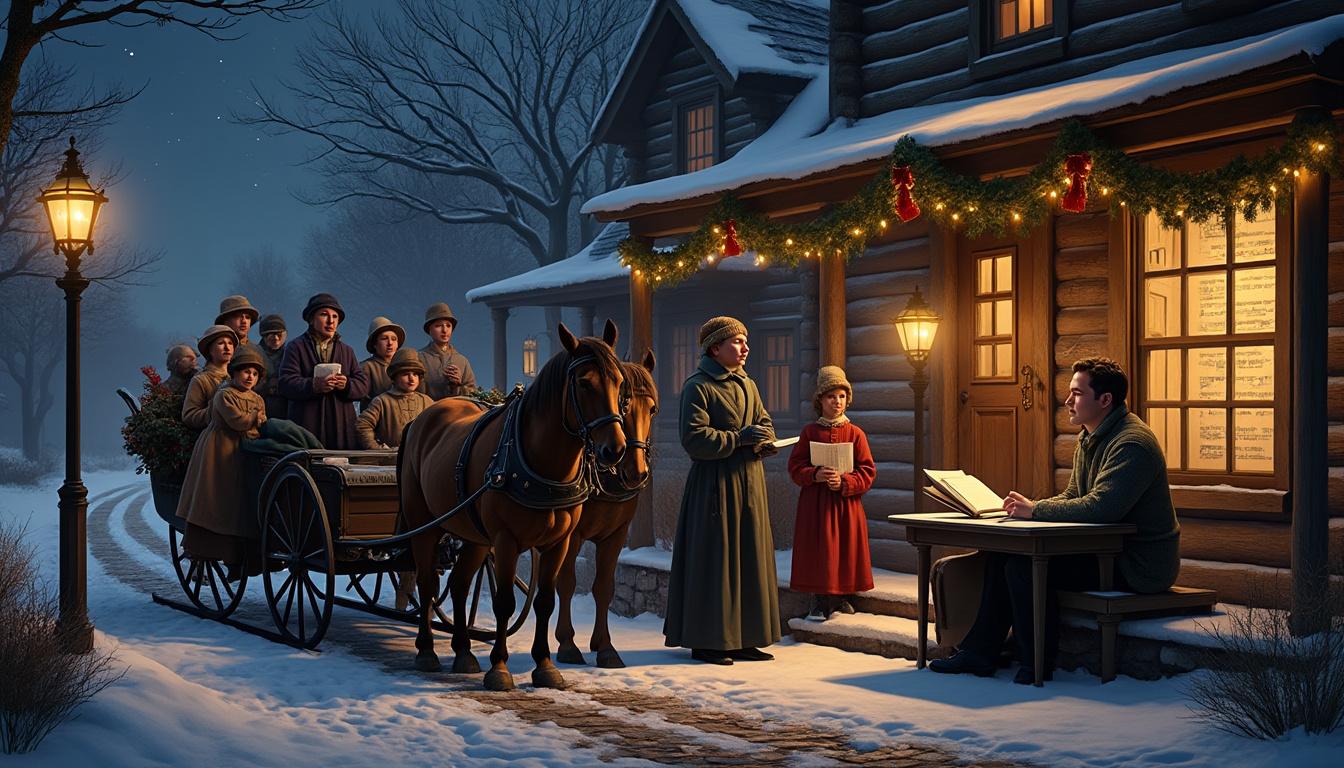
Every winter, the cheerful melody of “Jingle Bells” almost inevitably makes its way into our homes, through songs and Christmas markets. Yet, its history goes far beyond the traditional image of the sweet and family-friendly Christmas music we know today. Composed in the mid-19th century, this song originally hid stories of festive evenings and sleigh competitions, far from the garlands and religious spirit of Christmas. A look back at the lyrics, the origin, and the surprising evolution of this now emblematic song.
The article in brief
Dive into the little-known history of “Jingle Bells,” a Christmas song that became an icon despite its unexpected roots. Between parties, sleighs, and traditions, discover its fascinating evolution.
- Festive origin: Song born for Thanksgiving, not Christmas
- Lyrics full of surprises: References to raucous parties and sleigh races
- International impact: Covered by stars and the first song played from space
- From oblivion to success: Evolution from minor song to essential anthem
A melody that tells much more than a simple winter celebration.
The unexpected origin of “Jingle Bells”: a song for Thanksgiving
We have heard it so much during the holidays that it is easy to forget that “Jingle Bells” was not written in the spirit of Christmas. Originally composed under the title One Horse Open Sleigh by James Lord Pierpont between 1850 and 1857 according to sources, this melody was intended to celebrate Thanksgiving, an American holiday. Pierpont, a pastor and composer with an adventurous life, was inspired by the sleigh races he witnessed in Massachusetts, his home state. Sleighs, used as a means of transportation on snowy roads, could be dangerous because they were silent without bells, hence the importance of making the “jingle bells” ring to warn passersby. The clash between modernity and tradition is thus found in this song designed to evoke speed and winter festivities, more than a warm Christmas eve.
A song born from a very… adult joy
Originally, the melody mostly resonated during evenings where alcohol and romantic encounters punctuated the festivities. The original English lyrics clearly suggest a world where youth invites lightheartedness: “Take the girls tonight, and sing this sleighing song“. This slightly bawdy connotation is completely erased in the famous French adaptation “Vive le vent”, which favors the festive and family spirit of Christmas, thus upsetting the original message.
Growing success thanks to the simplicity of its lyrics and catchy tune
Despite a quiet start in 1857, the song resurfaced in 1859 under its famous title “Jingle Bells”. It gradually established itself in the repertoire of Boston choirs, especially during winter celebrations. Surprisingly devoid of religious content, it became a staple of year-end festivities. The charm of the simple and joyful tune hits the mark, aided by a melody easy to sing along, embodying the festive and friendly atmosphere typical of this season.
From Christmas music to interstellar history
Its aura quickly crossed borders. In 1889, Will Lyle recorded the first commercial version of the song. Worldwide success followed with numerous adaptations by artists such as Elvis Presley, Johnny Cash, or Nat King Cole, but also French stars like Dalida or Mireille Mathieu. A fascinating anecdote: it was the first piece of music played from space. In 1965, aboard the Gemini 6 spacecraft, two astronauts sang “Jingle Bells” to announce, in a scenario not far from fiction, the encounter with a “man in red” in a flying sleigh. A moment that perfectly illustrates the universal and timeless reach of this song.
Comparison table: original lyrics vs French adaptation “Vive le vent”
| Aspect | Original lyrics (1857) | French adaptation (Francis Blanche, 1948) |
|---|---|---|
| Main theme | Sleigh races, adult festive atmosphere | Joyful and family Christmas spirit |
| References | Sleigh rides, seduction, alcoholic parties | Snow, green firs, winter wind, innocence |
| Tone | Bawdy, festive, playful | Warm, soft, childlike |
| Current cultural usage | Little known, shared as a curiosity | Essential Christmas holiday song |
An essential presence in modern Christmas tradition
It is fascinating to see how Jingle Bells lyrics have crossed the ages by adapting to times and cultures. Today, this song is a true institution in Christmas music. From decorations to family Christmas carols, it sets the rhythm of winter celebration with contagious enthusiasm. Its tune has become a universal symbol of the holiday, despite a beginning far from clichés of snow and gifts.
List of curiosities around “Jingle Bells”
- First recorded song dedicated to Christmas: by Will Lyle in 1889.
- Inspired by: sleigh races in Massachusetts in the 1850s.
- Written by: James Lord Pierpont, uncle of the famous banker J.P. Morgan.
- Multiple adaptations: French, international versions, and covers by major artists.
- A trip to space: first music played by astronauts in 1965.
- A double meaning: between childlike joy and memories of a time when sleighs clattered on the snow.
Who composed Jingle Bells?
James Lord Pierpont, a 19th-century American pastor and composer, is its author.
Why wasn’t Jingle Bells a Christmas song originally?
Originally, it celebrated Thanksgiving and sleigh races, with lyrics evoking festive evenings more than the religious spirit of Christmas.
What do the original lyrics mean?
They describe sleigh races in Massachusetts, mixed with a joyful and sometimes slightly bawdy tone, evoking encounters and festivities.
How did Jingle Bells become a Christmas anthem?
Thanks to its catchy tune and its adaptation in Christmas choirs, despite its non-religious content, it became established during the holidays.
How did the song cross borders?
Covered by many international artists and broadcast during cultural events, including in space, the song became universal.