

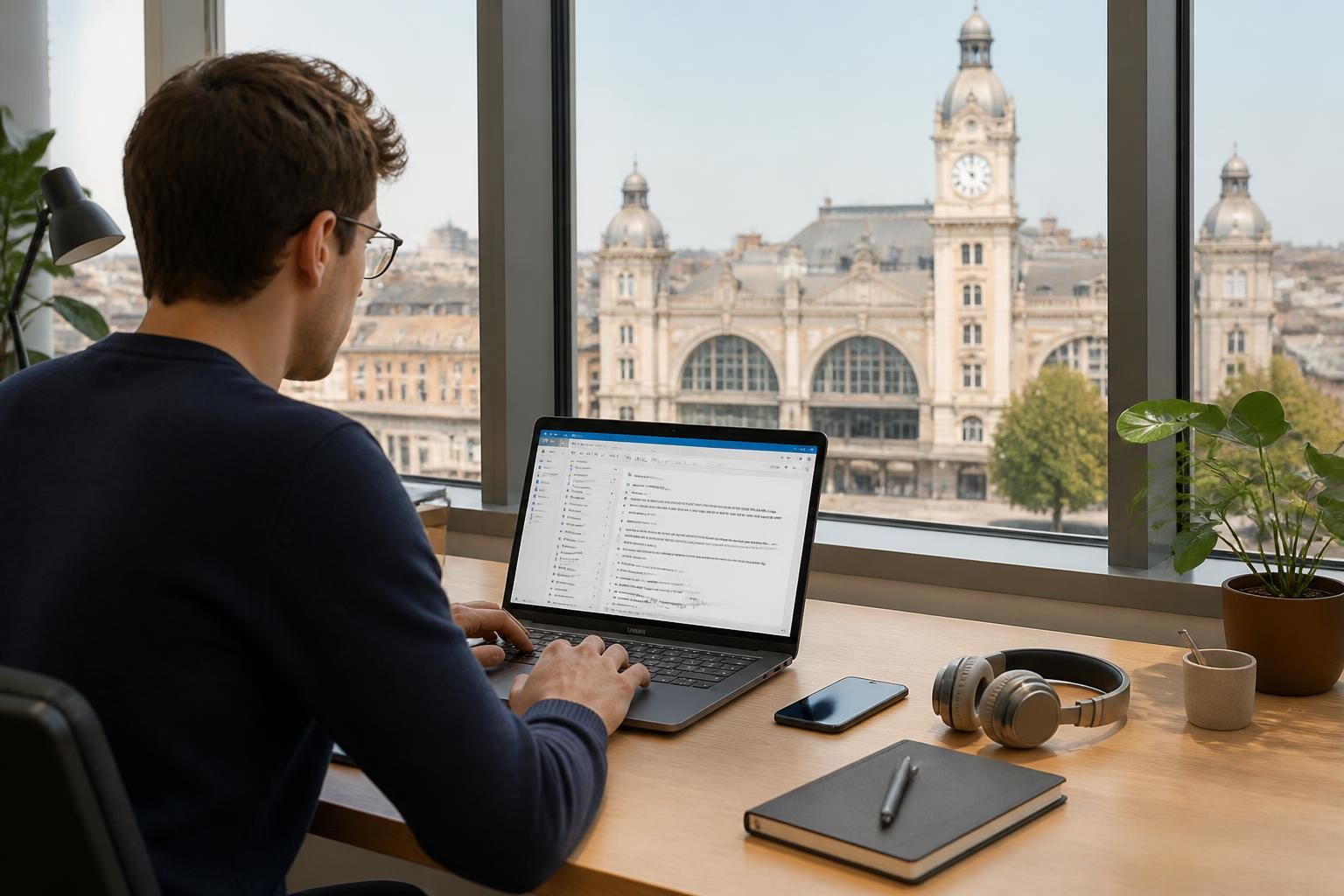
At Centrale Lille, digital is not just decoration: it’s the starting point of almost everything. Between the ENT connection, the Zimbra messaging, and services linked to Moodle, it’s best to know where to click to avoid small morning hiccups, when the coffee hasn’t quite kicked in yet. This ENT guide gathers the essentials to access the platform, understand the use of secure portals, and maintain a clear, practical, and reassuring communication centralization on a daily basis.
The article in brief
A single point of entry, well-managed credentials, and messaging that lets nothing slip through: this structures digital life at Centrale Lille. This overview helps save time, avoid connection errors, and better organize official exchanges.
- Simplified access to the ENT: secure CAS, university credentials, smooth navigation
- Useful Zimbra messaging: emails, calendar, notes, and message tracking
- Organizational habits: folders, filters, and a tidier inbox
- Security and troubleshooting: strong password, phishing awareness, Zimbra support
A concrete reference to master the Centrale Lille ENT without wasting time or energy.
Mornings can be very busy: an email to read, a class to find, a deadline to confirm, then that little moment of hesitation in front of the screen. It’s often there that one realizes the value of a well-understood access to the Centrale Lille ENT. Between the authentication portal, the messaging configuration, and shortcuts to school services, everything is based on a simple logic: centralize to lighten. And frankly, when days follow one another, that kind of clarity makes a real difference. A well-managed digital space is a bit like a well-prepared school bag: you breathe easier, and you look less.
Access to the Centrale Lille ENT and first stress-free connection
To enter the digital world of Centrale Lille, the starting point remains the same: authentication via CAS, then access to connected services. This system acts as a secure filter, which avoids multiplying passwords and limits the risk of confusion between different tools. In practice, it is enough to have university credentials, a stable internet connection, and an up-to-date browser. The platform access then becomes much smoother, provided you check the site address and keep an eye on the security padlock.
This process may seem a bit technical at first, but it is designed to simplify life afterwards. Once connected, the user finds their courses, administrative documents, messaging, and resources useful for their journey. The idea is quite clear: a single entry point for multiple uses. And as often in well-designed digital environments, the real gain is not immediately visible, it is felt when you stop juggling five tabs and three passwords.
Connecting via CAS and spotting good habits
The ENT connection goes through a centralized authentication step. The user enters their institutional ID and password, then accesses the school’s digital environment. In a student mobility context, this method has an obvious advantage: it protects data while avoiding scattered access. To be totally transparent, errors often come from a tiny detail: a poorly copied password, an address typed too fast, or a tab left open too long.
A good habit is always to check that the address starts with https:// and to log out after use, especially on a shared computer. It seems basic, but this is precisely what avoids unpleasant surprises. Here we find a very concrete logic: security is not a luxury, it’s a habit.
Direct access to Zimbra for faster use
When time is pressing, it is also possible to go directly to the Zimbra messaging without going through the ENT homepage. The official address allows you to open your inbox with your full university ID. This option often appeals to people who want to urgently check a message, verify a calendar, or respond to a summons without detour. The connection tutorial then becomes almost unnecessary for regular users but remains valuable for newcomers.
This dual entry point works well provided you keep the same security cues. The right site, the correct credentials, the proper habit of closing at the end: that’s the basis. And frankly, a well-memorized direct access avoids that small moment of solitude when you know an important email is already waiting in the inbox.
Zimbra messaging at Centrale Lille: usage, organization and communication centralization
Once connected, Zimbra becomes much more than a simple webmail. It is the heart of the school’s communication centralization, the place where official information, calendar reminders, administrative messages, and exchanges related to classes arrive. In 2026, as students often juggle hybrid classes, projects, and internships, this messaging remains a very concrete anchor point. It prevents information from scattering and allows keeping a clear trace of exchanges.
Its interface remains quite intuitive: inbox, folders, calendar, note-taking, message search. We find a logic close to a tidy desk, but in digital form. The real comfort mainly comes from the natural flow between reading, organizing, and tracking. When a tool gathers so many functions, daily management becomes lighter, almost without thinking.
Useful functions to manage emails without getting overwhelmed
The first habit to adopt is sorting messages. Creating folders by project, subject, or period allows finding information in seconds. Then, automatic filters save precious time: administrative emails, group exchanges, or teacher messages can go directly to the right space. That is where ENT usage becomes genuinely comfortable because the tool adapts to everyone’s pace.
A student can, for example, reserve a folder for internships, another for double degrees, a third for administrative documents. Nothing spectacular, but the effect is immediate: less clutter, less stress, and a breathing inbox. Honestly, it’s often this little digital tidying that changes everything.
Calendar, notes, and appointment tracking
Zimbra is not just for reading emails. Its integrated calendar helps follow meetings, deadlines, exams, and group appointments. Notes allow keeping an idea, number, instruction, or quick list handy. In a busy academic life, these functions make a real difference, especially when moving from one project to another without losing track.
Imagine a group of students preparing a file: the shared schedule avoids misunderstandings, notes keep the tutor’s instructions, and messaging records validations. We are far from a simple isolated email. Here, everything fits together coherently, and that’s precisely what makes the tool so useful.
Good practices for more effective ENT use daily
A good ENT guide is not limited to connection steps. It also helps adopt small gestures that simplify life in the long run. At Centrale Lille, digital uses are numerous: academic affairs, classes, internships, associations, mobility, pedagogical exchanges. Without organization, information can quickly scatter. With a few simple habits, everything becomes more readable.
Most users save time by structuring their inbox and synchronizing their tools with their personal calendar. Such a setting might seem trivial, but it avoids missed meetings, alert duplicates, and messages lost in the wrong place. Daily, these details often make all the difference.
List of simple gestures to stay on track
Here are some habits that make navigation smoother:
- Create thematic folders to find important emails quickly without searching a long time
- Activate automatic filters to sort messages as soon as they arrive
- Update your password regularly to strengthen account protection
- Check senders before opening an attachment or link
- Synchronize your calendar with a personal calendar to not forget anything
These gestures are nothing extraordinary, but they form a solid base. Like a well-set morning routine, they avoid unnecessary agitation and time loss. And when weeks speed up, this regularity becomes almost a discreet superpower.
Linking Zimbra to other tools for more flexibility
One of the most appreciated assets remains the possibility to link messaging to other digital services, especially for calendar and file storage. This allows having documents, events, and appointments handy without going back and forth between platforms. For a student, teacher, or staff member, this flexibility is far from anecdotal.
In real life, this translates into easier file preparation, better-followed meetings, and clearer priority management. Digital then becomes a support, not a constraint. And that’s exactly what one expects from an academic tool: that it helps without complicating.
Secure your platform access and avoid common pitfalls
Security is part of the essential habits around the Centrale Lille ENT. Phishing attempts remain frequent in university environments, especially because urgent messages are easy to imitate. An email that demands immediate connection, a suspicious attachment, or a strange link should always raise caution. The right strategy is to take a few seconds to check, rather than to fix a compromised access afterwards.
The password must be strong, unique, and regularly renewed. Enhanced authentication, when available, adds an appreciated layer of protection. One often thinks of major IT breaches, but in real life, small lapses are often the costliest. A shared workstation without logout, a browser left open, and the problem can happen quickly.
Recognize a suspicious message without mistakes
A fraudulent email is often spotted by a few simple signs: pressing tone, unusual mistakes, strange sender address, or shortened link seeming out of context. When doubt sets in, the best habit is to go through the official portal rather than replying directly to the message. Zimbra support can also help verify an email’s legitimacy or report a fraud attempt.
In a university environment, this caution is not excessive. It protects both personal data and institutional exchanges. And ultimately, it’s better to seem a little too cautious than to run after account recovery on a Friday night.
What to do in case of blockage or strange display
If the connection fails, the first check concerns credentials and network stability. Then clearing the browser cache can solve a display problem or unusual slowness. When that is not enough, university technical support should be contacted, which can guide to a reset or an appropriate solution.
In many cases, the breakdown is not serious, just a technical detail stuck somewhere. And that is also why a good ENT guide remains useful: it reassures, it organizes, and it restores a bit of logic where digital sometimes has the elegance of a poorly lit corridor.
| Tool | Main role | Most frequent use |
|---|---|---|
| ENT Centrale Lille | Entry point to digital services | Access to courses, procedures, and resources |
| CAS | Centralized secure authentication | Single connection to institutional services |
| Zimbra messaging | Official communication and organization | Emails, calendar, notes, and group exchanges |
| Moodle | Educational space and content submission | Course materials, homework, and teacher feedback |
Useful resources to go further in messaging configuration
Once the basics are acquired, some users want to go further in messaging configuration. This is often the case during an internship, double degree, or a year denser in projects. The need then becomes very concrete: better filtering, better synchronization, better sharing. And this is where Zimbra shows all its interest because it is not limited to sending emails.
Messaging also helps prepare meetings, follow working groups, and keep a clear memory of exchanges. In an academic setting, this continuity is valuable. It avoids chasing after scattered information in several tools and brings real coherence to the whole.
Practical markers to better exploit the digital ecosystem
To move forward calmly, it is useful to keep a few simple markers at hand. They help navigate between services without scattering and use the ENT as a real control center. Here is a useful starting base:
- Check the official messaging regularly to miss nothing
- Organize folders by priority to find important exchanges
- Check academic announcements on the ENT before any procedure
- Use the shared calendar for meetings and deadlines
- Request Zimbra support as soon as a technical doubt persists
These habits help keep a clear vision, even during busy times. And in a school where everything goes fast, having a reliable system handy is already winning a good part of the battle.
When ENT becomes a real ally throughout the journey
At Centrale Lille, the ENT is not just for connecting to a service. It links usages, supports procedures, and secures exchanges between students, teachers, and staff. That also explains the very important place of Zimbra in academic life: essential information passes through there, and decisions too. We then understand why taking a few minutes to properly set up one’s tools permanently changes daily life.
Deep down, it’s quite simple: the more the digital space is mastered, the more energy can go towards classes, projects, and life on campus. And that’s exactly what is expected from good digital organization.
How to quickly access Centrale Lille ENT?
The simplest method is to go through the CAS portal with university credentials. Direct access to Zimbra messaging is also possible via the dedicated official address.
Why is Zimbra messaging so important?
It centralizes official communications, convocations, academic information, and group exchanges. It is often the first place where important messages arrive.
What to do if ENT connection no longer works?
First check the internet connection, then verify the ID and password. If the problem persists, clearing the browser cache or contacting technical support can resolve the issue.
How to better organize your Zimbra inbox?
The most effective way is to create folders, activate automatic filters, and use the integrated calendar. This method avoids clutter and facilitates message tracking.
How to spot a fraudulent email?
A pressing message, poorly formulated or coming from a suspicious address should trigger alerts. In case of doubt, it is better to connect directly to the official portal and seek help from Zimbra support.


