The article in brief
Black pudding can remain on the menu during pregnancy, provided a few simple guidelines are followed. Between safe cooking, strict storage, and reasonable portions, the idea is not to deprive yourself but to eat with awareness.
- Thorough cooking essential: aim for 65 to 70°C to limit food risks
- Portion to monitor: stay around 80 to 150 g per week
- Better product choice: favor vacuum-sealed or reliable artisanal
- Non-negotiable hygiene: cold chain and clean kitchen remain essential
Well prepared, black pudding during pregnancy can be included in the pregnancy diet without unpleasant surprises.
When pregnancy comes to the table, every dish deserves a careful glance. Black pudding, with its strong taste and iron content, is one of those foods that provoke as much indulgence as questions. To be completely transparent, it is not forbidden, but it requires real dietary precautions to avoid food poisoning and maintain a food safety logic. The right reflex? Rely on safe cooking, impeccable storage, and measured consumption, without giving up the pleasure of a comforting meal.
This winter plate classic can have its place during pregnancy, provided its food risks and benefits are understood. Black pudding is already precooked during manufacturing, which changes the game, but it remains vulnerable to contamination if poorly stored or simply reheated halfway. The challenge is therefore not to ban it but to know how to choose, cook, and accompany this product with proper cooking advice. It is often in these daily details that serenity is built.
Black pudding during pregnancy: what you need to know before serving yourself
The first point to keep in mind is that black pudding is not a raw charcuterie. It is precooked at the time of production, which clearly distinguishes it from a dry sausage or raw ham. That said, during pregnancy, a precooked product never means “zero vigilance.” Poor storage, damaged packaging, or insufficient reheating can allow bacteria like Listeria monocytogenes or other agents responsible for food risks to develop.
Pregnancy also modifies immune sensitivity. This is why listeriosis and toxoplasmosis are closely monitored, as they can have serious consequences on the baby’s development. In everyday life, this mainly means one thing: black pudding during pregnancy must be treated as a “to secure” food, not as an absolute forbidden item. This nuance changes everything.
To visualize the right reflexes, it is useful to keep a mini-checklist in mind, a bit like preparing a changing bag before an unexpected outing:
- Check the expiration date and packaging condition
- Respect the cold chain from purchase
- Reheat thoroughly before tasting
- Avoid any cross-contamination with utensils
- Limit the portion to stay within a balanced pregnancy diet
In other words, caution does not spoil pleasure, it simply makes it more serene.
Safe cooking: the temperature that changes everything
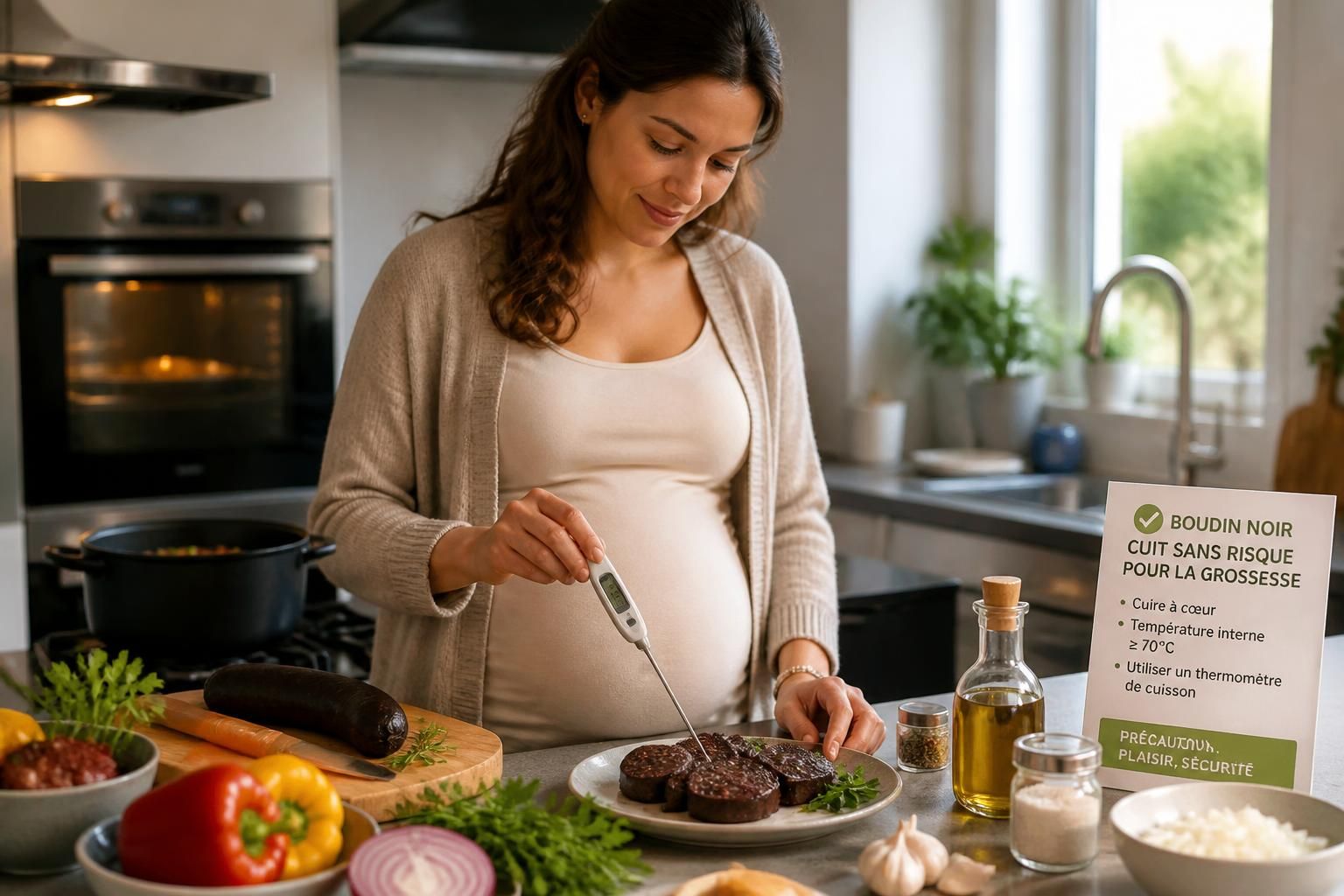
The decisive point remains safe cooking. To eliminate bacteria and reduce food risks, black pudding must reach 65 to 70°C at the core. In practice, this means that a hot surface is not enough: the inside must be well heated, especially if the product comes out of the refrigerator.
A kitchen thermometer then becomes a discreet but precious ally. In the pan, oven, or even gentle reheating, it helps avoid the false sense of security from “it looks hot.” It’s the kind of detail that can make the difference between a reassuring meal and an unpleasant digestive surprise.
A concrete example: a black pudding simply browned on the outside but still warm in the center remains too fragile for a pregnant woman. Conversely, even reheating, without burning the skin or drying out the flesh, better protects health. In pregnancy matters, precision is not a luxury, it is a good reflex.
Choosing your black pudding carefully to limit unpleasant surprises
The choice of product matters as much as the cooking. Vacuum-packed versions often offer better traceability, especially if the packaging is intact and the cold chain respected. Artisanal products can also be suitable, provided they rely on a serious producer and impeccable hygiene rules.
Conversely, a product sold by the slice deserves more attention. Approximate labelling, an overcrowded display case, or unclear shelf life can increase contamination risks. When in doubt, it’s better to rely on a product whose origin is clear, especially when the baby’s health is at stake.
What also reassures is reading the label with a careful eye. Fewer additives, less surprise, and sometimes a simpler composition. It’s not obsession, just a pragmatic way to move forward without unnecessary stress.
Black pudding and pregnancy: benefits, limits, and proper portion
Black pudding has an asset that many expectant mothers seek: it is rich in heme iron, a form of iron well absorbed by the body. During pregnancy, needs increase significantly, and this type of food can help support energy and prevent anemia. It also provides protein, zinc, and B vitamins, all nutrients useful daily.
But there is a downside to keep in mind. Black pudding also contains vitamin A in the form of retinol, as well as fats that are better not to multiply. That’s why recommendations converge towards moderate consumption, around 1 to 2 portions per week, about 80 to 150 g depending on habits and the rest of the menu. Again, the goal is not frustration but balance.
For those who like to compose complete plates, the combination with green vegetables works very well. Broccoli, spinach, or lentils bring fiber and minerals, while lightening the whole. A squeeze of lemon or some foods rich in vitamin C can even promote iron absorption. A clever meal, in short, without playing diva at dinner time.
Alternatives when the craving for iron remains
Cravings come and go, as often happens during pregnancy. If black pudding is not suitable that day, other options allow maintaining a good iron intake without the same precautions. Lentils, chickpeas, beans, spinach, or certain well-cooked meats can take over effectively.
A plant-based alternative, for example, can become a real comforting meal. A dish of lentils with tender vegetables and some whole grains brings softness, satiety, and stability. And for those who want to keep a touch of “pleasure,” a vegetable black pudding made from beetroot or legumes can help out without weighing down the menu.
In real life, the most useful thing often remains not to oppose pleasure and caution. Both can coexist very well, provided the plate’s content is adapted to the present moment.
Dietary precautions to remember when eating black pudding during pregnancy
When everything is laid out, the logic is actually quite simple. Black pudding during pregnancy can be consumed if cooking, storage, and quantity are controlled. To avoid forgetting, it’s better to follow concrete guidelines, like a well-thought-out shopping list on a tired day.
| Point of vigilance | Good practice | Why it is useful |
|---|---|---|
| Temperature | Reach 65 to 70°C at the core | Reduces bacteria responsible for infections |
| Storage | Strictly respect the cold chain | Limits microbial proliferation |
| Quantity | Stay around 80 to 150 g per week | Avoid excess vitamin A and fats |
| Purchase | Favor vacuum-packed or reliable artisanal | Improves traceability and food safety |
| Preparation | Clean work surfaces and utensils | Avoids cross-contamination in the kitchen |
For more information on charcuterie products during this sensitive period, additional insight is available here: charcuterie and pregnancy: points of vigilance. And if today’s topic is more specific, this guide can also help sort things out: the risks of black pudding during pregnancy.
Ultimately, the right question is not “is it allowed?”, but “how to eat it without complicating life?”. It is often there that the most reassuring balance lies.
Is black pudding forbidden during pregnancy?
No, it is not forbidden. However, it must be well cooked through, consumed in moderate quantities, and stored under good conditions to limit food risks.
What safe cooking temperature for black pudding during pregnancy?
The target temperature is between 65 and 70°C at the core. A kitchen thermometer helps to check that the center is well heated, not just the surface.
How much black pudding can be eaten during pregnancy?
The ideal is to stay around 80 to 150 g per week, in one or two portions, to avoid excess vitamin A and maintain a balanced pregnancy diet.
What are the main food risks to watch?
The main risks concern listeriosis, toxoplasmosis, and contamination linked to poor storage. The cold chain and kitchen hygiene remain crucial.
What alternatives if the craving for iron remains strong?
Lentils, spinach, chickpeas, or well-cooked meats are good options. They effectively supplement iron intake without requiring the same precautions.