

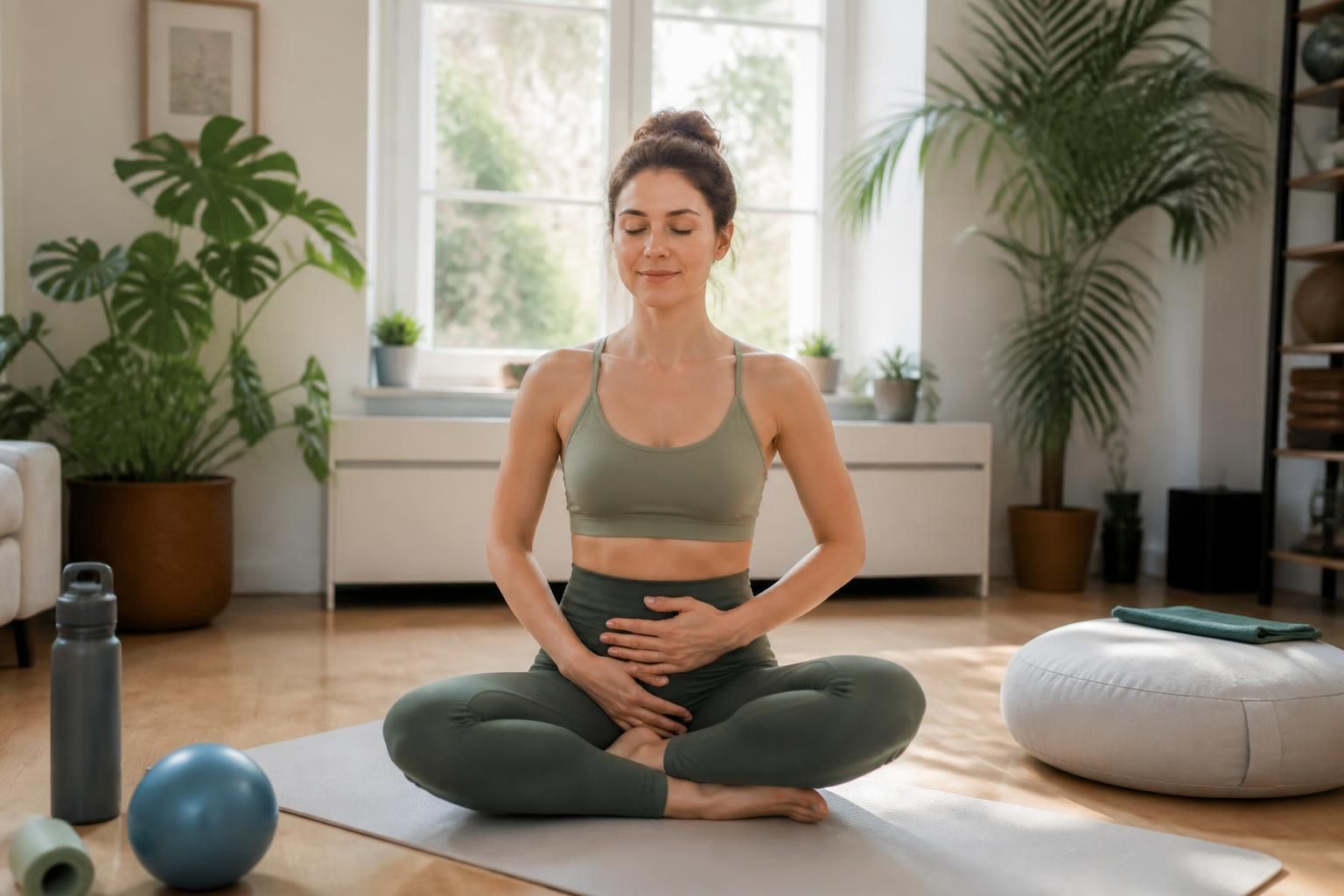
Who has never heard that a well-toned pelvic floor is the key to daily comfort and preserved intimate health? Yet, pelvic floor rehabilitation, often associated with an occasionally intimidating medical field, can be easily integrated into your home routine. This accessible and gentle practice, thanks to simple and regular exercises, is a true ally for strengthening the muscles of the pelvic floor, preventing urinary leaks, or soothing pelvic pain. Whether after pregnancy, during menopause, or simply to maintain your pelvic well-being, here is a detailed guide to reconnect with your body gently, at your own pace.
The article in brief
Discover how to easily practice pelvic floor rehabilitation at home with simple and effective exercises to tone your pelvic floor muscles.
- Guided self-rehabilitation: Simple exercises to strengthen the pelvic floor daily
- Prevent disorders: Tone your pelvic floor to reduce urinary leaks and pain
- Accessible techniques: From Kegel squeezes to bridge exercises, adapted movements
- Visualization through images: Learn with diagrams and videos for better understanding
Making pelvic floor rehabilitation accessible at home, for lasting well-being and confidence.
The pelvic floor: essential to intimate health and daily well-being
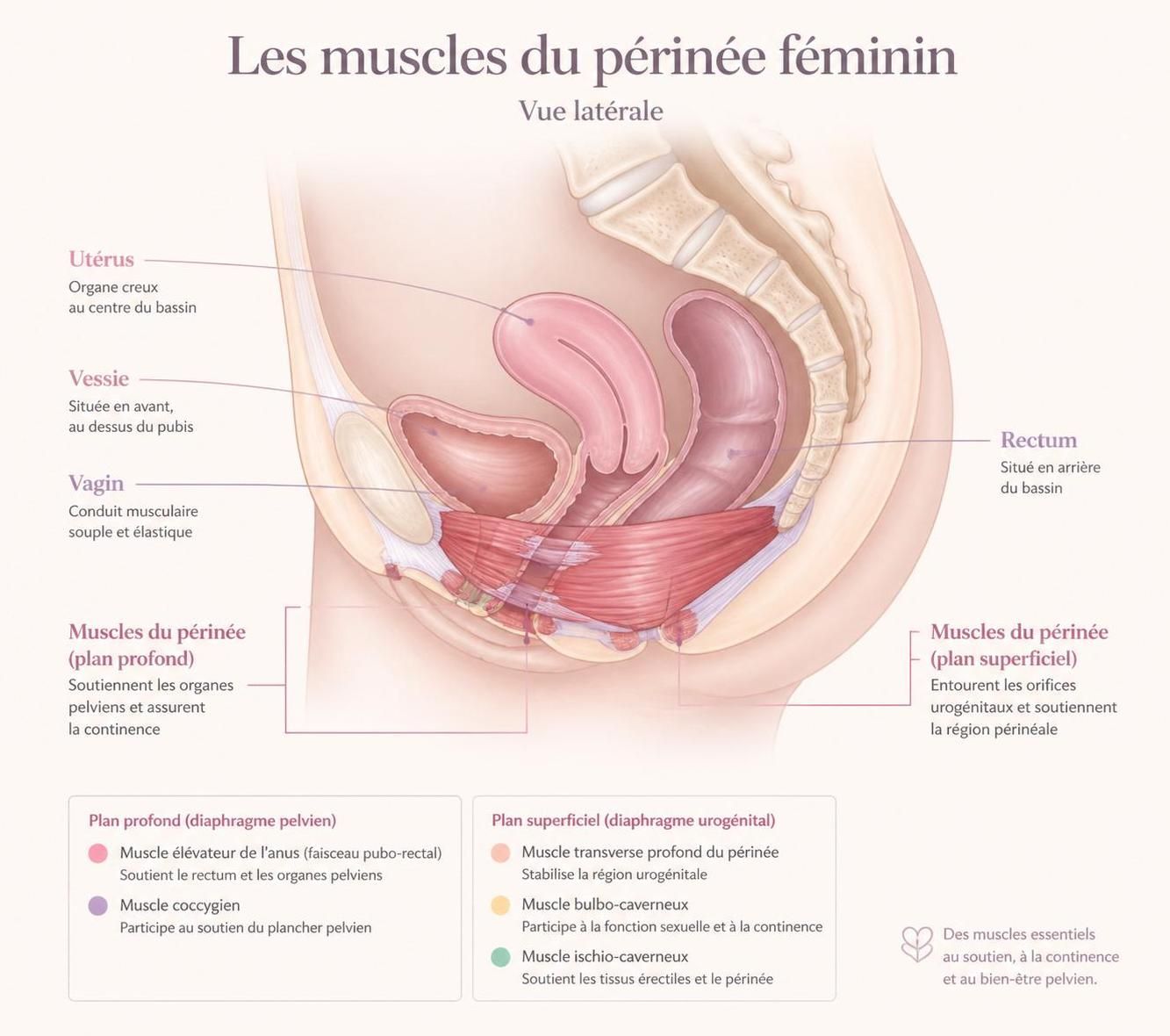
The pelvic floor, often mysterious and neglected, is nevertheless the foundation of solid bodily balance. This muscular hammock located at the pelvis supports vital organs such as the bladder, uterus, and rectum. Its role goes far beyond simple support: it guarantees continence, influences posture, and affects the quality of sexual life. Over time, or following events such as childbirth, these muscles can lose tone, causing discomfort and bothersome issues. The good news? With simple actions to reproduce at home, it is possible to tone this key muscle to regain comfort and confidence.
Simple and effective exercises to strengthen the pelvic floor muscles
Practicing pelvic floor rehabilitation at home primarily relies on repeating targeted exercises. Among them, the famous Kegel squeeze is indispensable. It consists of contracting the pelvic floor muscles as if holding back a strong urge, maintaining the contraction for 5 to 10 seconds, before releasing. This regular action, performed several times a day, helps restore tone and prevent incontinence.
Another gentle and accessible exercise: the pelvic bridges. Lying on your back, knees bent, slowly lift the hips until the body is aligned, feet flat, while the gluteal and pelvic muscles contract. This position activates not only the pelvic floor but also overall core strengthening, promoting better posture.
Deep breathing perfectly complements this practice. Sitting comfortably, breathe in deeply while engaging the pelvic floor muscles, then exhale while releasing, which encourages better body awareness and optimizes exercise effectiveness. This gentle-strength training combination is ideal for developing harmonious pelvic well-being.
3 exercises to easily integrate into your daily routine
- Pelvic floor contraction: lying down, contract the pelvic floor muscles for 10 seconds, release for 10 seconds, repeat 10 times.
- Ball squeeze between knees: lying down, squeeze a small ball between your knees while contracting the pelvic floor, hold 5 seconds, release, 10 repetitions.
- Glute muscle contraction: standing, feet apart, squeeze the glutes tightly for 10 seconds, release, repeat 10 times.
These movements prioritize simplicity and regularity, essential foundations for successful self-rehabilitation, and require no special equipment.
Pelvic floor rehabilitation at home: comparison of manual and biofeedback methods
To choose the most suitable approach, it is essential to understand the advantages and limitations of each method.
| Method | Advantages | Disadvantages |
|---|---|---|
| Manual rehabilitation | Easy to practice at home, low cost, increases muscle awareness | Technique must be well mastered, sometimes difficult muscle localization, longer results |
| Biofeedback | Allows precise visualization of contractions, fast results | Higher cost, requires specific equipment or specialized follow-up |
While self-rehabilitation remains an excellent starting point, professional support is advised to optimize progress, especially if pain or disorders persist.
Guiding yourself with images for better understanding and practice
Visual learning plays a major role in mastering pelvic floor exercises. Clear anatomical diagrams show the muscles involved and the exact posture to adopt. Accompanied by tutorial videos, these resources facilitate the correct integration of movements, avoiding frequent errors such as involuntary contraction of the glutes or abdomen.
For example, integrate the exercises described on this specialized site, where intuitive graphic presentation makes the practice accessible to all, with tailored advice for effective muscle strengthening.
Adopt a regular routine for lasting results
The secret lies in consistency. Pelvic floor rehabilitation at home requires only a few minutes, morning and evening, to establish a habit favorable to muscle tone. Results, often measured after one month, are confirmed over several months with recovered well-being and reduced symptoms.
For those who want to take the experience further, innovative tools like connected devices offer fun and motivating monitoring. They combine pelvic floor exercises and real-time feedback, thus boosting self-rehabilitation and the pleasure of self-care.
- Select fixed times to easily incorporate the exercises.
- Learn to listen to your body and adjust the effort level.
- Combine exercises to engage all the pelvic floor muscles.
- Do not neglect breathing to optimize relaxation and effectiveness.
- Consult a specialist in case of pain or doubt about your practice.
What is pelvic floor rehabilitation at home?
Pelvic floor rehabilitation at home involves simple and regular exercises aimed at strengthening the muscles of the pelvic floor, doable without specific equipment, independently.
When to start these exercises?
It is advised to start pelvic floor rehabilitation after childbirth or at the first signs of muscle weakening, such as urinary leaks. However, these exercises can be done at any age.
Are Kegel exercises effective?
Yes, Kegel exercises are among the most effective to tone the pelvic floor. When done correctly and regularly, they prevent incontinence and strengthen intimate well-being.
Should one consult a professional?
A medical consultation is recommended at the beginning, especially in case of disorders or pain, to receive a tailored program and avoid incorrect techniques.
How long to see results?
Positive effects often appear after one month of regular practice, with lasting results after three to six months.


