

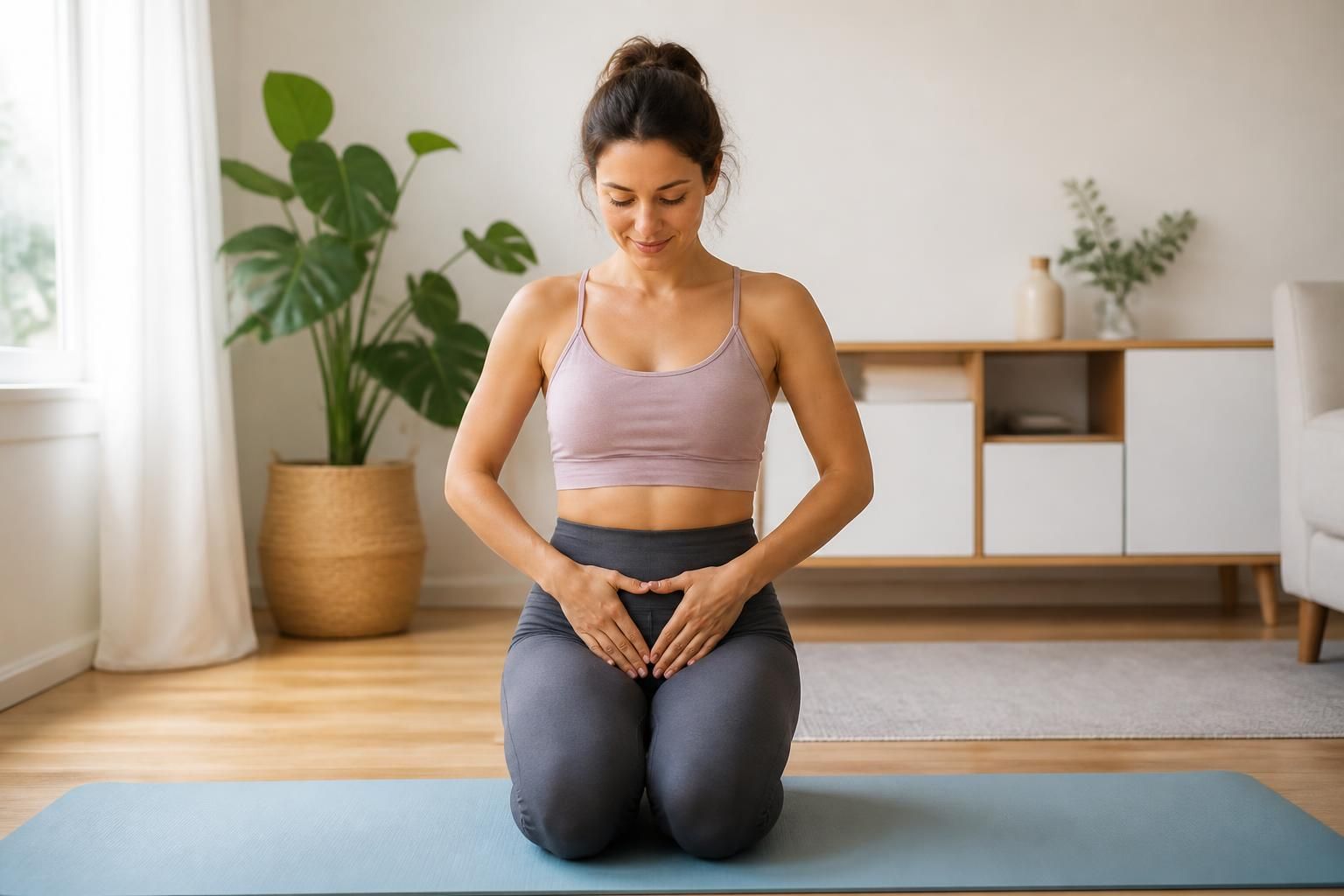
The perineum, this discreet but oh-so-important group of muscles, plays a central role in supporting the pelvic organs and controlling the bladder. Too often neglected, it nonetheless deserves special attention, especially when facing small troubles like urinary leaks that can arise with age, pregnancy, or after childbirth. Fortunately, strengthening the perineum through simple and accessible exercises, notably the famous Kegel exercises, can greatly improve quality of life and prevent urinary incontinence. Discovering how and why to strengthen the pelvic floor is a healthy gesture for living daily life better.
The article in brief
Practical and effective solutions exist to tone the perineum and limit minor urinary inconveniences in daily life.
- Essential strengthening : Strengthening the perineum supports the bladder and pelvic organs
- Adapted exercises : Kegel and other simple movements to practice anywhere
- Recommended regularity : Several daily sessions for lasting results
- Useful consultation : Health professionals to guide perineal rehabilitation
Taking care of your perineum means living better with your body and effectively preventing urinary leaks.
Strengthening your perineum: boosting pelvic health to prevent urinary leaks
The perineum, often unknown, is nonetheless a precious daily ally. It supports the bladder, the uterus in women, and the rectum, while playing a key role in urinary control. When it loses its tone, the first visible signs are often urinary leaks, a sign of pelvic floor weakness. This muscle group therefore requires regular attention, especially after events such as pregnancy or a surgical procedure. Beyond preventing leaks, toning the perineum also contributes to better overall posture and restored intimate comfort.

How to identify the perineum muscles before starting?
To begin an effective muscle strengthening, you first need to know which muscles to target. This involves feeling the area you contract to hold back the urge to urinate, without tightening the buttocks or abdominals. It is a precise sensation, a delicate contraction that you must manage to isolate while breathing calmly. This awareness is essential for the perineum exercises to be well-targeted and effective.
Kegel exercises: the classic way to tone your perineum
Popular for both women and men, Kegel exercises can be easily done at home, almost anywhere, without equipment. The method is based on controlled contractions of the perineum followed by relaxations. For women, they are often recommended after pregnancy or during menopause. For men, they improve bladder control, especially after prostate surgery.
- Lying down, gently contract for 5 seconds then relax for 10 seconds.
- In a chair, straighten up to simulate daily situations.
- Standing, to engage the muscles against resistance.
It is important to maintain natural breathing and not to push downwards to avoid any counterproductive effects.
The benefits of a strengthened perineum in daily life
Strengthening the perineum is above all about preventing urinary incontinence and reducing discomfort related to leaks. But it doesn’t stop there. Good tone improves comfort during intimate relations, supports the pelvic organs against prolapse, and helps maintain balanced posture. This tone also plays a role in preventing lower back pain.
Incorporating other exercises for complete perineum strengthening
Beyond Kegel exercises, several movements complement the routine for an effective perineal rehabilitation:
| Exercise | Duration/Repetitions | Main benefit | Equipment |
|---|---|---|---|
| Kegels | 3 sets of 10 contractions/day | Strengthens sphincters and pelvic muscles | None |
| Hypopressive abdominals | 10-15 minutes | Reduces abdominal pressure | Exercise mat |
| Glute bridge | 3 sets of 15 | Strengthens pelvic floor and glutes | None |
| Diaphragmatic breathing | 5 minutes | Gently activates the perineum | None |
| Abdominal plank | 30-45 sec x 3 | Stability and deep muscle tone | Mat |
The importance of regularity for bladder control
A toned perineum is not built in one day: repetition and consistency matter much more than intensity. Three to four daily sessions, each including about ten slow and controlled contractions, establish lasting good muscle tone. Generally, the first visible effects appear after three to six weeks. For people experiencing greater difficulties, consulting a health professional, such as a midwife or physiotherapist, remains a recommended option for personalized follow-up.
To explore the topic further and discover exercises specifically adapted for women, the link to perineum exercises for women provides a wealth of useful information. Similarly, prevention of urinary leaks and learning targeted exercises are well presented on perineum exercises for urinary leaks.
What are the signs of a weakened perineum?
Signs include urinary leaks, a feeling of pelvic heaviness, difficulty controlling the bladder, and sometimes organ prolapse.
How long does it take to see the effects of Kegel exercises?
Initial results generally appear after 3 to 6 weeks with regular practice, about 3 to 5 times per week.
Can perineum exercises be done after childbirth?
Yes, it is even recommended. Postnatal perineal rehabilitation usually starts 6 to 8 weeks after childbirth with medical advice.
Is it possible to wear urinary protection during perineal rehabilitation?
Yes, wearing protections allows free practice of exercises while limiting stress related to urinary leaks.
What mistakes should be avoided during perineum exercises?
Avoid holding your breath, contracting the abdominal or buttock muscles, pushing downwards, or doing overly intense exercises.


