Between cravings for raclette that hit at the worst time and the little anxiety in front of the cheese aisle, pregnancy quickly turns a simple pleasure into a real headache. Good news: it’s not about banning everything, but knowing how to recognize allowed cheeses, those to watch, and forbidden cheeses when food safety becomes the priority. The idea is simple: limit food risks without unnecessary deprivation, especially concerning listeria, the main culprit behind recommendations about soft cheeses and raw milk products. With a few clear landmarks, a pregnant woman can continue to compose tasty, reassuring plates that are quite decent regarding pregnancy diet.
The article in brief
Cheese during pregnancy is not a minefield, provided you can distinguish the right categories and read labels without being intimidated.
- The safest duo: pasteurized cheeses without rind, easy to identify
- Safe bets: aged hard cheeses, safe even if made with raw milk
- Products to avoid: soft raw milk cheeses, blues, and washed rinds
- The daily smart move: cooking, hygiene, and systematic packaging checks
With the right guidelines, it becomes easy to enjoy cheese while pregnant without turning every meal into a health investigation.
Allowed cheeses during pregnancy: the simple rule to remember
To be completely transparent, the most reliable logic boils down to one sentence: pasteurized and without rind is generally a yes. This rule immediately removes much of the daily doubt, especially in supermarkets where most products are precisely pasteurized cheeses. In a kitchen where everything often moves too fast, this guideline avoids hesitation when preparing a gratin, a salad, or a somewhat improvised evening platter.
I still remember those moments when you open the fridge hoping for a simple dinner, only to find a camembert, some leftover comté, and a bag of grated cheese. Not all cheeses are equal, of course, but allowed cheeses are more numerous than you might think. And let’s be honest: pregnancy is not an easy team sport, so it’s better to keep a few solid pleasures on the menu.
Pasteurized, thermized, raw: what you really need to understand
Pasteurized milk has been heated to neutralize almost all dangerous bacteria, which changes everything for the pregnant woman. In contrast, raw milk retains its natural flora but also potential microbes, including the notorious listeria. Thermized milk sits between the two: more reassuring than raw but not as safe as pasteurized.
When in doubt, the label remains the best ally. The mention “pasteurized milk” reassures, while “raw milk” deserves more caution, especially for soft cheeses. When nothing is indicated on a supermarket product, it is often a pasteurized cheese, but it is better to keep the habit of checking.
One detail also matters a lot: the rind. Even on an allowed cheese, it can concentrate surface bacteria. The small habit of removing it therefore makes more difference than it seems.
List of allowed and forbidden cheeses for pregnant women
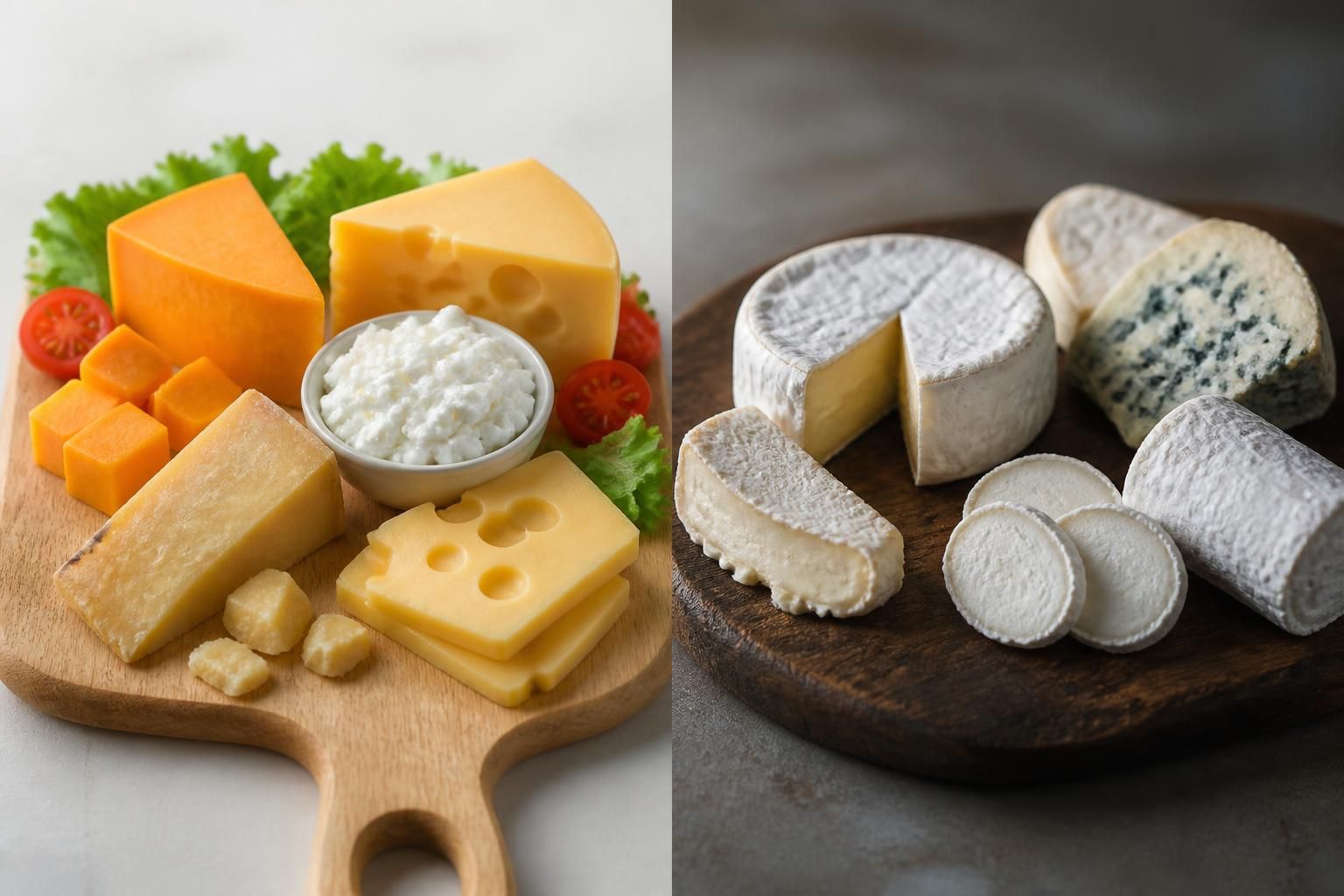
To avoid getting lost in nuances, the easiest solution is still a clear table. It makes it possible to distinguish at a glance the safe products, those that require real caution, and those better left aside during pregnancy. The crucial factor is not only taste or texture but especially the combination of moisture, milk type, and aging method.
| Cheese type | Examples | Status during pregnancy | Watch point |
|---|---|---|---|
| Cooked pressed cheese | Comté, emmental, beaufort, parmesan | Allowed | Very low moisture, minimal risk |
| Pasteurized fresh cheeses | Mozzarella, ricotta, mascarpone, Saint Môret | Allowed | Consume quickly after opening |
| Soft raw milk cheese | Camembert de Normandie, brie de Meaux, reblochon | Forbidden | High moisture, favorable environment for listeria |
| Blue cheeses | Roquefort, bleu d’Auvergne, fourme | Forbidden | Out of precaution, even some pasteurized |
| Washed rind cheeses | Maroilles, munster, époisses, mont d’Or | Forbidden | Moisture and risky aging |
In practice, the best allies remain hard cheeses and well-identified fresh products. For further information, a useful reference is consulting a specialized guide such as cheeses to favor during pregnancy or checking specific cases like mozzarella during pregnancy, often the source of very concrete daily questions.
Safe cheeses to keep on the plate
Hard cheeses are the big winners. Comté, emmental, gruyère, parmesan, beaufort, or cheddar offer an excellent compromise between pleasure and safety because their low water content slows bacterial growth. This precisely explains why they rank among the best choices in pregnancy diet.
Parmesan deserves a special mention. Even when made from raw milk, its long aging and very dry texture make it a particularly reassuring choice. Comté also retains a special place, provided it is stored properly and consumed under good hygiene conditions.
Pasteurized fresh cheeses bring real daily comfort. Industrial mozzarella, ricotta, mascarpone, pasteurized fresh goat cheese, Philadelphia, or Saint Môret make it possible to vary meals without stressing over every bite. This is far from trivial when looking for some lightness during an already busy period.
Forbidden cheeses during pregnancy: those to avoid without hesitation
There are also products better to be frankly avoided. Forbidden cheeses mainly concern soft raw milk cheeses, blues, and washed rind cheeses because their moisture and manufacturing method create a favorable environment for listeria. Here, the precautionary principle is not excessive: it responds to a real health issue.
Listeriosis remains rare, but its consequences can be serious during pregnancy. The risk is not just theoretical, as the bacteria can cause fever, fatigue, miscarriage, or premature delivery. This is also why recommendations are firm about non-pasteurized products and the most moist textures.
- To avoid: raw milk camembert, brie de Meaux, reblochon, raw mont d’Or
- To avoid: roquefort, bleu d’Auvergne, fourme, and other blue cheeses
- To avoid: maroilles, munster, époisses, pont-l’Évêque, and livarot
- To avoid: pre-grated cheeses sold in bags
If there is still doubt about a particular case, consulting a targeted dossier like soft cheese and pregnancy or risks of reblochon during pregnancy often helps to decide without unpleasant surprises. And frankly, it’s better to make a small sacrifice than face a real health alert.
The particular case of raclette, fondue, and tartiflette
Here’s the kind of topic that brings everyone to the same table. A well melted raclette, a Savoyard fondue heated to a high temperature, or a tartiflette straight from the oven bubbling changes everything because cooking destroys listeria. The vigilance is then less about the cheese itself than its final temperature and proper preparation.
The nuance remains important: a raw raclette cheese nibbled cold does not provide the same level of safety as a hot, melted cheese. It is therefore better to use a pasteurized product, remove the rind, and wait until it is truly melted. For winter dish cravings, this allows keeping conviviality without sacrificing caution.
Details also count for accompaniments. Some charcuterie raise more questions during pregnancy, which is why it is worth also taking a look at what charcuterie implies during pregnancy. Cheese is never alone on the table, and that is often where the right reflexes come into play.
How to store cheeses during pregnancy to limit food risks
Even an allowed product can become problematic if storage leaves much to be desired. Food safety therefore relies on simple, almost banal gestures but extremely effective: properly set refrigerator, clean packaging, quick consumption after opening, and hand hygiene before handling. Nothing spectacular but very effective.
Fresh cheese, especially, cannot tolerate approximation. An opened mozzarella left for several days, a forgotten ricotta, or a bag of grated cheese opened too long ago are never good ideas. In the daily life of a future mom, these practical little details often make a real difference.
By the way, thinking about simple meals can also lighten the mental load. A salad with mozzarella, a comté gratin, a slice of pasteurized fresh cheese, or pasta with parmesan work perfectly. The goal is not to cook complicated meals but to eat serenely.
The good habits to keep in mind
To keep a clear course, a few reflexes suffice. They avoid most mistakes and make shopping easier, even when the store is crowded and the choice seems endless. A methodical approach, without obsession, often remains the most comfortable.
- Systematically remove the rind from allowed cheeses.
- Prefer packaged products rather than cut-to-order.
- Check the “pasteurized milk” mention on the label.
- Consume fresh cheeses quickly after opening.
- Avoid pre-grated cheese bags.
If the subject of cheese during pregnancy comes up often, it is because it touches both pleasure and vigilance. And precisely, this combination deserves to be treated with useful guidelines rather than vague prohibitions. A good reflex is better than an endlessly spinning worry.
Frequently asked questions about allowed and forbidden cheeses for pregnant women
Questions often come back, especially when cheese cravings hit at the worst time. Here are the most useful answers, straightforward and jargon-free, to navigate more calmly in the world of cheese and pregnancy.
Can you eat mozzarella during pregnancy?
Yes, industrial mozzarella made from pasteurized milk is allowed. It must be consumed quickly after opening, and the label should be checked if the product comes from a cheese shop or abroad.
Is parmesan safe for a pregnant woman?
Yes, parmesan is among the safest cheeses thanks to its very dry texture and long aging. It remains an excellent choice in a balanced pregnancy diet.
Which cheeses should be absolutely avoided?
Soft raw milk cheeses, blues, and washed rind cheeses should be avoided during pregnancy. Pre-grated products also deserve to be excluded as a precaution.
Is raclette allowed during pregnancy?
Yes, if the cheese is well melted and served hot. It’s best to use a pasteurized cheese, remove the rind, and avoid consuming the raw cheese before cooking.
What to do if a risky cheese was eaten by mistake?
You should watch for the appearance of fever, body aches, or flu-like symptoms and quickly consult a healthcare professional. In such situations, it’s better to act promptly than to remain uncertain.
Cheese during pregnancy is not forbidden territory, just a terrain to be navigated methodically. Ultimately, with a few well-chosen guidelines, it becomes what it always should have been: a simple, reassuring pleasure perfectly compatible with family life.