

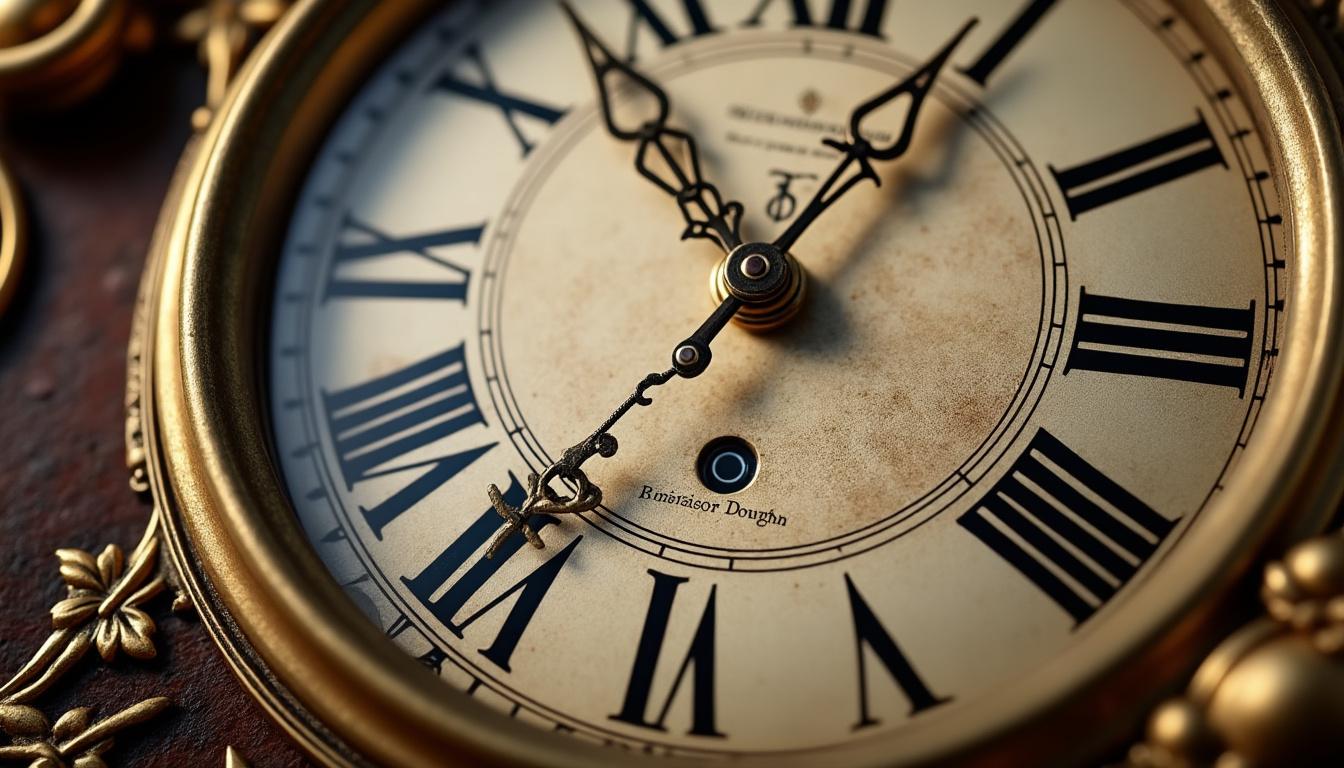
In everyday exchanges in English, the expression “o’clock” is a familiar abbreviation that sets the rhythm for telling time, both on clocks and in conversations. But where does this particular phrase come from, and why does it remain so commonly used despite the passing of time? The origin of “o’clock” dives into the history of the English language and its relationship with time, blending simplicity and tradition to clearly indicate the exact hour. This expression is a charming reminder of how language evolves while keeping an eye on its past, a balancing act every parent knows well when juggling family schedules.
The article in brief
An accessible look at the historical origin and the current use of the expression “o’clock” to tell time in English.
- Historical origin: “o’clock” comes from “of the clock” shortened into a common expression
- Linguistic use: marks the exact hour without minutes in English
- Cultural connection: reflects the importance of mechanical clocks in the language
- Living expression: persists in colloquial language and teaching
A simple expression that reminds how language connects past and present at every moment.
Origin and meaning of “o’clock” in the English language
Originally, “o’clock” is a contraction of the longer expression “of the clock” which literally meant “from the clock.” In the past, it was important to distinguish the time indicated by a mechanical clock rather than less precise methods like the sundial or bells. Pocket watches becoming common in the 17th century, saying the time “of the clock” emphasized the reliable source of the time indication. Gradually, this phrase was shortened to “o’clock.” This reduction fits within a broader trend to simplify and speed up spoken communication in English.
Practical use in everyday English life
In modern practice, “o’clock” accompanies a full hour to clarify that no additional minutes are involved. Saying for example “three o’clock” therefore means “three exact hours” without seconds or minutes to add. This expression is found as much in conversations as on wall clocks or in educational materials intended for learning English.
One could have fun thinking that this precision is also useful for parents juggling children’s schedules, like retrieving a forgotten pacifier at the appointed time, somewhat like explained in this article about the pacifier and breastfeeding. The time becomes a reassuring landmark, just like a well-established routine in a family.
How “o’clock” fits into Anglophone culture
The expression “o’clock” is today a cultural marker that reflects the importance of mechanical clocks in English and more broadly Anglophone society. It shows how a technological tool influences language. This imprint is found both in English teaching, where learners must integrate this abbreviation, and in literature and even music, symbolizing a certain elegance in the way time is told.
To accompany this journey through time, here are two videos that offer complementary insight into the evolution of clocks and the expression “o’clock” in context:
And then, because language breathes life daily, the famous moment when one announces the exact time with “o’clock” recalls a simplicity that reassures, especially in organized families or shared moments
List of reasons why the expression “o’clock” persists
- Clarity: indicates the full hour without ambiguity, useful orally.
- History: from a tradition linked to the first mechanical watches and clocks.
- Simplicity: practical contraction to facilitate communication.
- Culture: rooted in the language, passed down in teaching and media.
- Practicality: often used in formal and informal situations.
Summary table: evolution and uses of the expression “o’clock”
| Period | Original expression | Main use | Linguistic evolution |
|---|---|---|---|
| 17th century | of the clock | Indicate the time according to a mechanical clock | Formally pronounced, introduction into common language |
| 18th century | o’clock (contraction) | Mark the full hour without minutes | Oral and written simplification |
| 20th century to today | o’clock | Expanded use in everyday life and learning | Stabilization and maintenance in modern language |
This tradition recalls both the richness and simplicity that language can retain, like the little family rituals that charm everyday life, such as a suitcase full of cuddly toys during a family trip. For other everyday life tips, the site also offers ideas that really simplify the flow of days with children, gently, like the list of useful birth gifts.
What exactly does ‘o’clock’ mean?
It is an abbreviation of ‘of the clock’, used to indicate the precise hour without adding minutes.
Is ‘o’clock’ used in writing?
Yes, it is a common expression both orally and in writing in informal and educational contexts.
Why not just say the time without ‘o’clock’?
Saying ‘o’clock’ avoids any ambiguity when referring to an exact hour, clarifying communication.
Is the expression ‘o’clock’ used in all English variants?
Yes, it is used in most Anglophone variants, although some sometimes prefer the digital time.
Can ‘o’clock’ be used for minutes?
No, ‘o’clock’ is reserved for whole hours; minutes are simply announced separately.


