

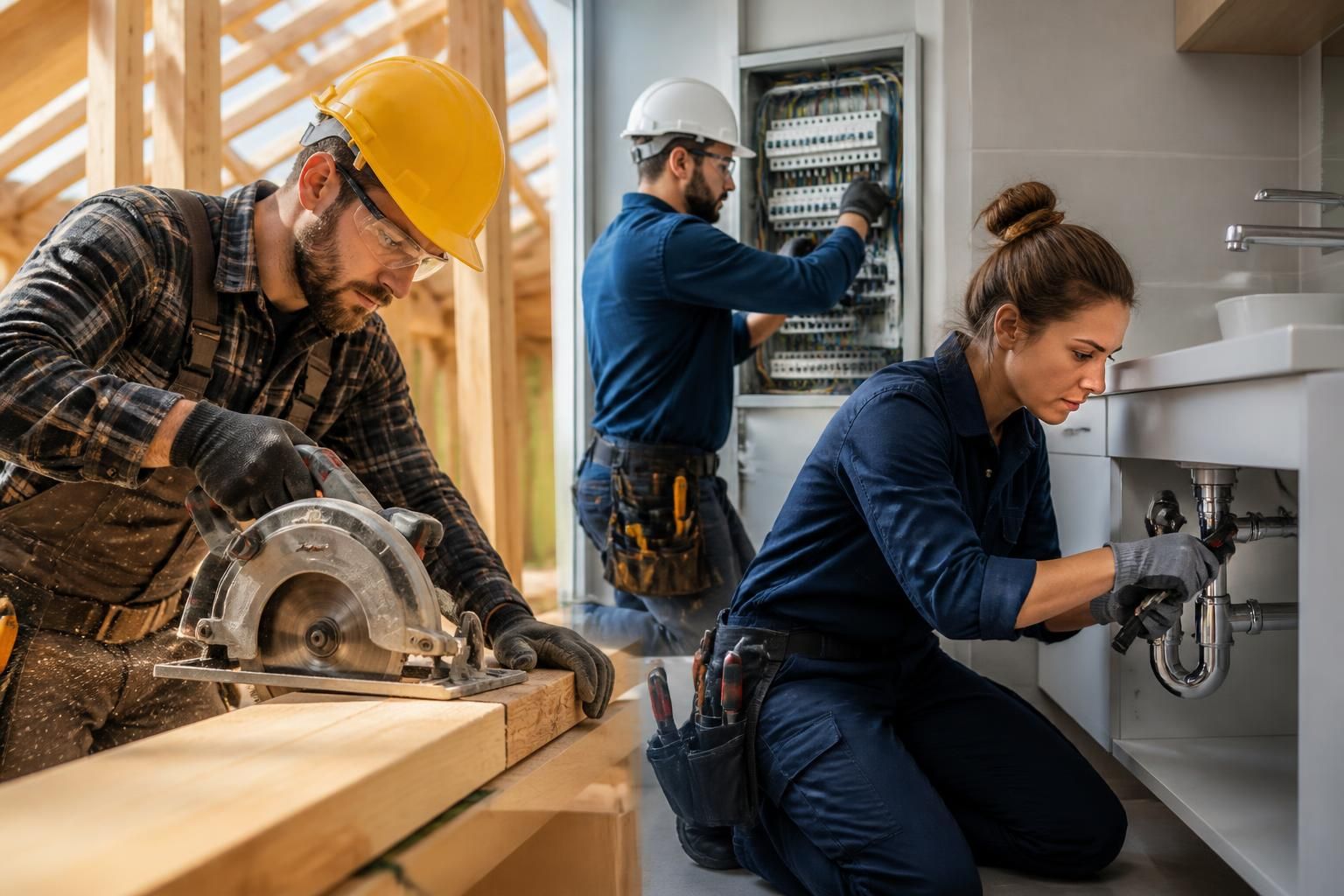
In workshops, on construction sites or in the heart of bakeries, one thing becomes very clear in 2026: manual trades are no longer a plan B. They offer solid opportunities, salaries that can quickly rise with experience, and above all a real usefulness on a daily basis. Between plumbing, electricity, carpentry, welding, masonry, heating, building painting, roofing, and renewable energies, the market is looking for reliable, trained profiles capable of quickly getting into the concrete. For many career changers, it is even the return to a profession where one finally sees the result of their efforts.
The article in brief
Manual trades draw their strength from a lasting demand, a shortage of candidates, and more accessible training than one might imagine. The real challenge is to choose a path that fits the field, the lifestyle rhythm, and the desired level of remuneration.
- Most promising sectors: Construction, maintenance, food trades, and local services
- Most sought-after trades: plumber, electrician, welder, roofer, mason
- Accelerated retraining: CAP, professional title, or apprenticeship to enter quickly
- Incomes to watch: independence can far exceed salaried work
This guide helps to identify the trades that really recruit and those that pay the most according to the profile.
To be completely transparent, the word “manual” covers very different realities. Between a masonry site, an emergency plumbing intervention, a day of carpentry in a workshop or a position in renewable energies, the constraints are not the same. This is precisely what makes the subject interesting: behind these often discreet trades lie fast trajectories, sometimes very profitable, and often more human than just a computer screen. Since demand has picked up again in renovation, maintenance, and craftsmanship, employers are clearly more open to career changers, even without a linear background.
Manual trades recruiting the most in 2025 and 2026: why the market remains tight
Let’s be honest with each other: if these trades recruit so much, it’s not a fad. They respond to needs that cannot be outsourced: repairing a leak, installing an electrical system, renovating a roof, making furniture, maintaining a garden, ensuring the welding of a technical part, or maintaining a production line. DARES estimates that in 2026, more than 600,000 positions remain unfilled each year in manual sectors, which reflects both market tension and the scale of opportunities. And in training centers, artisan enrollments have increased by 25% since 2020: candidates have understood that a concrete trade can also offer security.
The phenomenon affects several audiences at once. Young people are looking for meaning, tertiary sector employees want to get out of the all-screen environment, and many mid-career people want to find a more tangible rhythm. The famous moment when you switch from Excel sheets to walls to be built is not always easy, but it has something liberating about it. Moreover, a skills assessment or a short immersion via France Travail helps to avoid the big leap into the void and to check if the daily life of the trade really corresponds to the initial desire.
Sectors where recruitment remains strongest
Construction (BTP) dominates largely, especially with energy renovation. Between heating, electricity, building painting, roofing, and masonry needs, sites often lack qualified workers. Industry and maintenance closely follow, with strong tensions on welders, boilermakers, or maintenance technician positions. Food trades remain very promising, notably because an adult CAP can quickly open the door to a real professional activity.
Green spaces and local services complete the picture. Landscapers, gardeners, janitors, or auto mechanics easily find their place in an active employment basin, especially when companies are looking for someone reliable above all else. The field thus confirms a simple thing: the more useful the trade is on a daily basis, the more it retains its value, even when the economy changes face.
Top most demanded manual trades: access, tension, and opportunities
The ranking of the most sought-after manual trades in 2026 focuses on professions still lacking trained candidates. Employers favor profiles capable of learning quickly, respecting safety instructions, and getting into the real rhythm of the field. For those who want a concrete entry point, here are the trades that most often appear in company offers and needs.
| Trade | Sector | Access | Tension | Main asset |
|---|---|---|---|---|
| Plumber-heating engineer | Construction | CAP or short training | Very high | Repair, renovation, heating |
| Electrician | Construction | CAP, BP or apprenticeship | Very high | Sites, maintenance, safety |
| Welder | Industry | CAP or certification | Very high | Sought specialization |
| Roofer | Construction | CAP | Very high | Renovation and heritage |
| Mason | Construction | CAP or possible without diploma | Very high | Constant volume of sites |
| Maintenance technician | Industry | Pro bac or BTS | Very high | Versatility and stability |
| Baker | Food trades | Adult CAP in one year | High | Rapid training and continuous demand |
| Landscaper | Green spaces | CAPA or BP | High | Outdoor work and creation |
This table says the essential: some trades are accessible faster than one might think, and several can be built without an initial diploma. In a city, on a site or in a workshop, reliability often counts as much as the CV. This is particularly true for plumbing, roofing, or electrician positions, where trust is gained very quickly when the work is well done.
To go further on retraining paths and possible incomes, a detour through well-paid manual trades can help compare options without getting lost in promises too good to be true.
Trades that pay the best once experience settles in
Starting salaries often remain modest, but the gap widens quickly with specialization. A confirmed plumber-heating engineer, an electrician skilled in repairs, a qualified welder or an autonomous roofer can reach very comfortable levels. And when one goes independent, the turnover changes scale again, even though of course costs, equipment and travel expenses must be deducted.
In food trades, the potential is real as well. A baker who is self-employed can generate a high volume of activity, especially if the location is good and the clientele loyal. The same applies to some landscapers or auto mechanics: income depends as much on technical skills as on local reputation. In other words, it’s not just a trade that pays well, it’s also how you practice it.
Retraining in a manual trade: the most realistic path
When a desire for change becomes clear, it’s better to advance step by step. Testing the trade before quitting everything remains the best idea, because between the image one has and the reality on the ground, there may be a world of difference. A day in a carpentry workshop, an immersion on a masonry site or a week in a bakery often suffice to know if the body, the rhythm and the atmosphere really suit.
Then comes the choice of training. The adult CAP, the professional title, apprenticeship, or some short certifications allow quick entry into employment, sometimes in less than a year. CPF, Transition Pro, regional aids and France Travail can secure the transition. And for those considering a more creative specialty, carpentry and cabinetmaking remain good options, provided one accepts a demanding and meticulous apprenticeship.
Trainings that open the most doors
The CAP remains the clearest path, especially when offered for adults in one year. It lays solid foundations, reassures employers, and offers a real technical base. The professional title goes straight to the point with a very operational logic. Apprenticeship is ideal for learning in contact with reality, with the bonus of remuneration during training.
For retraining, you also have to think about financing before registering. A well-chosen training is not only a question of passion but also of security of the path. It’s not very glamorous, admittedly, but it’s often what allows one to go all the way without getting discouraged by the first setback.
To discover other paths and opportunities, selected publications around retraining also provide useful landmarks to refine one’s project before starting.
Potential for independence: when the trade becomes a real small business
Many manual trades take on another dimension when they move to micro-enterprise, then to a more developed structure. Word of mouth, local demand, and networking platforms help fill an order book. An independent artisan chooses their sites, sets their prices, and organizes their time, which changes everything for life balance.
But beware, independence also requires rigor. You have to manage quotes, insurance, equipment, deadlines, and prospecting. Those who succeed best are often those who first consolidated their skills as employees before flying on their own. It’s a bit like learning to ride a bike: it’s better to have ridden a few kilometers before opening one’s own road.
Choosing the right manual trade according to your rhythm, body, and daily life
The best manual trade is not necessarily the one that recruits the most. It must also correspond to endurance, schedules, taste for contact, and life reality. Someone who likes working outdoors will be more comfortable in landscaping, masonry, or roofing. Someone who prefers precision and diagnosis will flourish more in electricity, maintenance, or custom carpentry.
For food trades, early hours and cadence count a lot. For construction, one has to accept travel, weather, carrying loads and omnipresent safety. Women nowadays find their place in these sectors, as long as gestures, method, and execution quality are up to par. And honestly, seeing a team break stereotypes on the first day is always nice.
- If concrete motivates: target plumbing, heating or masonry
- If precision attracts: choose electricity, welding or maintenance
- If outside gives energy: prioritize landscaper or roofer
- If creation appeals: look at carpentry, joinery or cabinetmaking
- If ecological transition matters: explore renewable energies
Deep down, the right choice looks less like an abstract crush and more like an honest test of everyday life. That’s where the difference is made between a trade admired from afar and a real career held for the long haul.
Which manual trades are recruiting the most right now?
The most demanded remain plumber-heating engineer, electrician, welder, roofer, mason and maintenance technician, with high tension in construction and industry.
Can you retrain quickly in a manual trade?
Yes, thanks to the adult CAP, the professional title or apprenticeship. Some paths allow entering employment in less than a year, depending on the chosen trade.
Do manual trades really pay well?
Yes, especially with experience, specialization or setting up on your own. An independent artisan can generate a high turnover, even if charges still need to be integrated.
Is a diploma required to start?
Not always. Several trades recruit with a CAP, a short certification, or even without an initial diploma, then a progressive skills upgrade on the job.


