

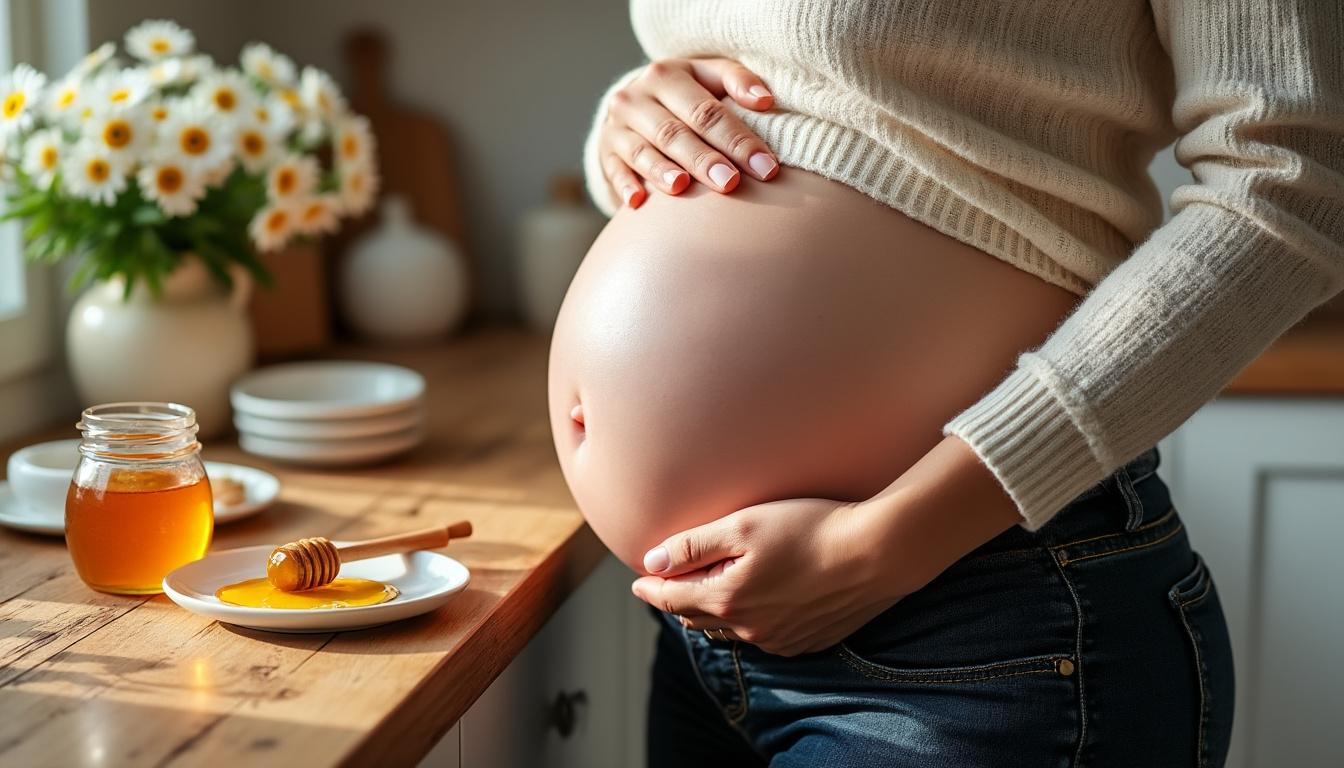
Pregnancy weaves around life a veil of delicate precautions, where every bite becomes a promise of health for two. Honey, the sweet nectar of bees, has always charmed our palates with its benefits and golden roundness. But does this sweet treasure slide safely into the diet of pregnant women? Between the sweetness of nature and the imperatives of food safety, this small jar of honey raises essential questions for maternal health and that of the future baby.
The article in brief
A clear and caring look at consuming honey during pregnancy, at the crossroads of nutrition and health precautions.
- A sweetness to handle with care: Honey may contain potentially risky botulism spores.
- Enhanced food safety: Choose quality honey, pasteurized or heated, to avoid any danger.
- Nutrition and benefits: Honey remains a natural source of antioxidants and gentle energy.
- Expert advice for pregnant women: Integrate honey without excess and always aware of the risks.
Honey and pregnancy: between sweetness and vigilance, a balance to cultivate daily.
Honey during pregnancy: a matter of food safety
Honey, this golden liquid with amber reflections, is rich in flavors and virtues. Yet its consumption by pregnant women raises a major concern: the possible presence of Clostridium botulinum spores, responsible for botulism. This risk, although low in adults, is recognized in infants under one year old, and naturally leads to questions regarding pregnant women. Because if the immune system changes during this period, maternal health remains a priority.
If ingestion of spores is possible via unheated honey, caution requires opting for pasteurized or heated honey, thus limiting dangers while preserving precious benefits. The famous compromise between natural and safe then fits into a conscious and informed approach.
Risks related to botulism and pregnancy
Botulism, a rare but serious disease, can cause severe neurological disorders. Although in adults the immune system is generally able to neutralize these spores, pregnancy modifies certain defenses, encouraging vigilance. The key is not to let anxiety settle, but to favor caution.
As with all food, the source is key. Artisanal honey, uncontrolled, can present invisible contamination. Conversely, industrial honey subjected to pasteurization processes significantly reduces these risks.
The nutritional benefits of honey for pregnant women
Beyond health concerns, honey remains a wonderful source of antioxidants and natural sugars, easily assimilated by the body. Its contribution of gentle energy is a significant asset to support increased needs during pregnancy.
In the sweetness of its crystals, honey can also soothe an irritated throat or relieve some mild digestive troubles, common in expectant mothers. The key lies in reasonable consumption, far from excesses that could disrupt overall nutritional balance.
How to safely integrate honey into your diet?
Here are some practical tips, gentle like a ray of sunshine:
- Choose pasteurized or heated honey, ideally of controlled origin.
- Avoid raw honey that might contain invisible spores.
- Consume in moderation, making sure not to exceed one tablespoon per day.
- Do not use it as a replacement for a varied diet, but as a precious complement.
- Favor local and recognized honeys, whose traceability is ensured.
Is honey safe during pregnancy?
Discover the essential precautions to take to consume honey safely during pregnancy. This interactive infographic guides you with clear advice to avoid risks related to Clostridium botulinum and choose honey beneficial for you and baby.
1. Why the risk of botulism during pregnancy?
Clostridium botulinum is a bacterium that can be found in unpasteurized or very raw honey. Although this risk is extremely rare in adults, it can be dangerous for the fragile immune system of infants.
Botulism is a rare but serious poisoning caused by neurotoxins produced by Clostridium botulinum. Honey may contain spores of this bacterium, without it being visible or altering the taste. In adults, the digestive system destroys these spores, but in very young children and pregnant women, caution is needed.
2. Choice of honey: what to prioritize?
- Pasteurized honey: Favor pasteurized honey to minimize contamination risk.
- Quality labels: Choose quality honey with organic certifications or from a local beekeeper.
- Liquefied honey: If the honey is crystallized, prefer naturally liquefied honey, never heated at too high a temperature.
- Small amounts: Buy small quantities to avoid prolonged storage, which may affect composition.
3. Practical recommendations
Moderation
Consume honey in moderation, no more than one tablespoon per day, to enjoy its benefits without excess.
Avoid for baby
Never give honey directly to babies under 12 months old to avoid the risk of infant botulism.
Storage
Store honey at room temperature, in an airtight jar, away from heat and humidity.
4. Visualize advice by pregnancy trimester
Guide table: Comparison of honey types and their risks during pregnancy
| Type of honey | Treatment | Risk of botulism | Recommendation |
|---|---|---|---|
| Raw honey | Untreated, natural | High | Avoid during pregnancy |
| Pasteurized honey | Heated at high temperature | Very low | Recommended for pregnant women |
| Heated honey (domestic) | Domestic heating before consumption | Low | Possible if well heated without excess |
| Filtered industrial honey | Filtered and heated | Very low | Perfectly suitable |
In this fragile balance between sweet delights and maternal health, every action counts. By the way, for those who like the idea of a tender and authentic gift, honey also delicately lends itself to a gourmet idea, to be found among carefully selected gift ideas. A way to blend sweetness and attention in every moment.
Breastfeeding and honey consumption: what you need to know
After pregnancy, when it comes to breastfeeding, the question of honey consumption sometimes remains. Fortunately, in the breastfeeding mother, the immune system is mature, and no cases of botulism linked to honey have been observed. Honey can therefore gently accompany this stage, while remaining balanced to preserve health and energy.
In case of doubt, consultation with a healthcare professional is always the best ally to move forward with peace of mind.
For those who like preparing healthy and tasty homemade snacks, honey offers a nice and natural alternative, adding a breath of sunshine to simple and nourishing treats.
Is honey really dangerous during pregnancy?
The main danger comes from botulism spores that may be in raw or unpasteurized honey. It is preferable to avoid their consumption or choose pasteurized honey.
Can I consume artisanal honey during pregnancy?
It is better to favor quality honey that is certified and pasteurized. Unheated artisanal honey may present a potential risk, so caution is necessary.
Is honey allowed during breastfeeding?
Yes, honey is generally safe for breastfeeding mothers. It is recommended to consume it in moderation as part of a balanced diet.
Can honey be given to a baby?
It is strictly discouraged to give honey to babies under one year old due to the risk of infant botulism.


