

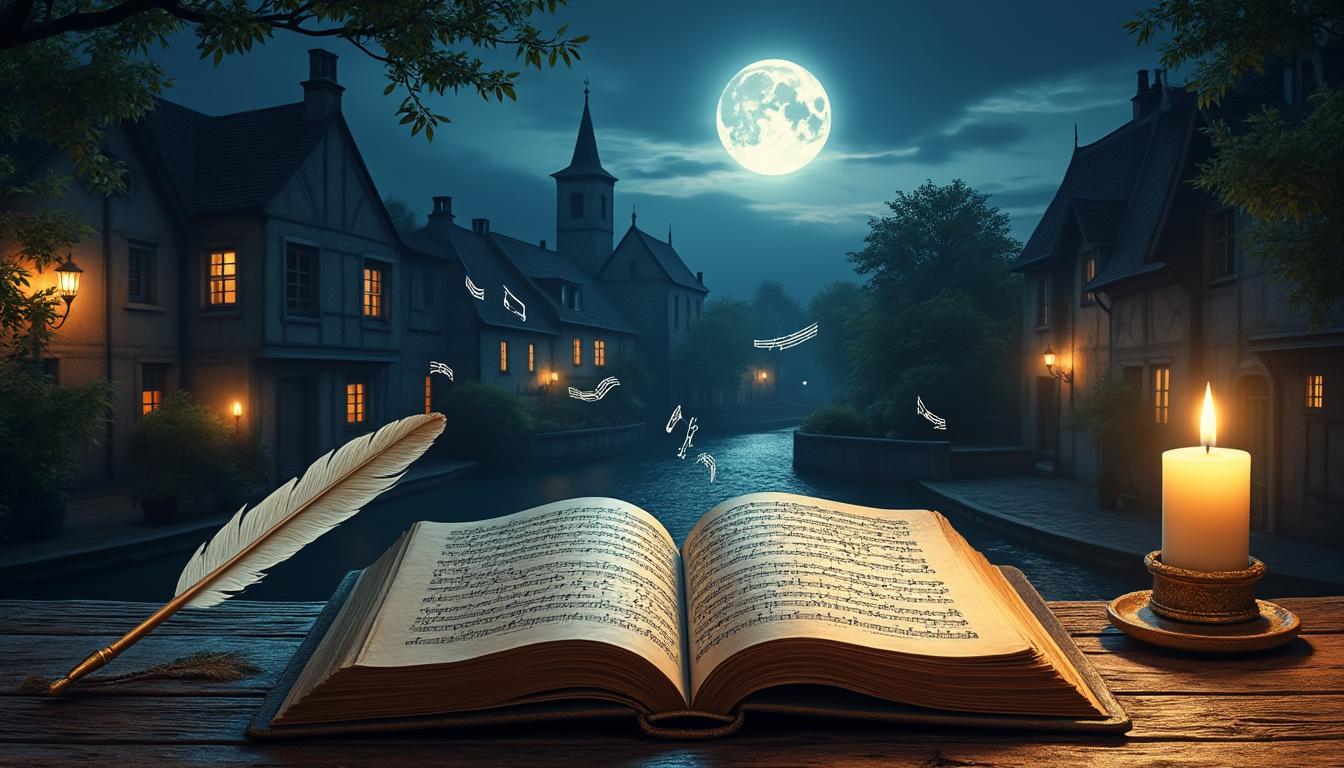
“Au clair de la lune,” an essential nursery rhyme in French popular culture, has been soothing young and old alike for generations. Behind its gentle melody and simple lyrics lies, however, a rich history rooted in the 18th century, and deep symbolism often unknown. This traditional song, spanning ages and styles, invites a subtle decoding where poetry, friendship, and creativity intertwine. Let’s dive together into its origins, meaning, and the hidden treasures in its words.
The article in brief
A sensitive dive into the rich history and lyrics of the famous nursery rhyme Au clair de la lune, between tradition and timeless poetry.
- Secret origins: A traditional French song from the 18th century
- Hidden meanings: Friendship, creativity, and symbolism of the quill and the moon
- Timeless melody: A sweet tune accompanying generations
- Cultural influence: A living heritage at the heart of our childhood nights
A journey into a universal lullaby that continues to touch young and old alike.
The fascinating origins of Au clair de la lune: a heritage that spans time
Au clair de la lune draws its roots from the 18th century, a period when oral tradition flourished in popular evening gatherings. This traditional song with anonymous lyrics reflects the simplicity and sensitivity of a bygone era. Although the light and catchy tune has often been mistakenly attributed to composers such as Jean-Baptiste Lully, it is actually a collective treasure, passed down by word of mouth. Each generation has thus enriched this fragment of popular culture, making this melody a true hymn to nocturnal sweetness.
Lyrics and symbols: beyond apparent simplicity
The lyrics of Au clair de la lune, often sung without reflection, carry deep symbolism. The figure of Pierrot, an emblematic character of Italian comedy, here embodies tenderness and vulnerability. Asking for a quill “to write a word” by the moonlight evokes a gesture of sincere friendship and sharing. The quill, a tool for writing and creation, becomes a symbol of authentic communication, while the moon embodies the secret of nocturnal confidences. This interpretation reveals a poetic world where child and adult meet, lulled by a simple but emotion-filled melody.
Au clair de la lune: decoding the lyrics revisited by Mister Toony
Exploring this classic melody, Mister Toony brings a touch of modernity and freshness to Au clair de la lune. His version revisits the nursery rhyme with delicate lyrics blending fantasy and contemporary sensitivity. This sensitive decoding highlights how the song, while staying faithful to its heritage, adapts to speak to children as well as adults today. The quill ready to write reveals a call to creativity, to connection among friends, under the moon’s conspiratorial light, making resonate a universal message of hope and sharing.
A melody that resonates in every family
Mister Toony’s interpretation captivates with its fluidity, soft notes, and intimate atmosphere. It is a melody encouraging little ones to dream and older ones to rediscover the magic of childhood. This intergenerational dimension, strengthened by accessible lyrics, makes Au clair de la lune a song still present in homes, a bridge between past and present. Like those days when preparing children’s sunglasses, combining protection and style, this song adapts to accompany every family moment of gentleness.
Meaning and symbolism in popular culture
The richness of this traditional song is not limited to its melody; it extends to its symbolic content. The moon, silent witness to confidences, offers a sacred frame to the sharing of emotions. This moonlight becomes a refuge space, where the quill symbolizes openness to others and creation. In this sense, Au clair de la lune celebrates friendship, complicity, and self-expression through the simple act of writing a word or a thought. This universal message resonates in every home, persisting through time and memories.
Table of key symbolic elements
| Element | Meaning | Emotional impact |
|---|---|---|
| The quill | Creativity, communication, friendship bond | Inspires the desire to exchange and create |
| The moon | Refuge, confidences, nocturnal complicity | Evokes the sweetness and mystery of nights |
| Pierrot | Innocence, tender vulnerability, popular figure | Invites kindness and nostalgia |
Why does this lullaby remain rooted in popular culture?
The strength of Au clair de la lune lies in its simplicity and universality. Important in the world heritage, this song crosses eras and generations, maintaining intact freshness. It is also a gentle tool for young parents seeking to establish soothing rituals, far from overly idealized discourses. If we had to summarize its appeal, it would be precisely this ability to mix the familiar with the mysterious, offering a sound cocoon where childlike poetry meets sincere emotion.
- An emotional connection accessible at all ages
- A melody that soothes and reassures
- An intergenerational bond that unites families and friends
- A universal message of friendship and sharing
To go further into the family and sensory universe of music and gentle rituals, also discover how to choose sunglasses for children, a protective element that naturally fits into families’ caring daily life.
Who wrote the lyrics of Au clair de la lune?
The lyrics come from an anonymous text dating back to the 18th century; it is a traditional French song passed down orally.
What is the main meaning of the song?
The exchange around the quill under the moonlight symbolizes friendship, creativity, and shared confidences.
Why does Mister Toony revisit this song?
To bring a contemporary and poetic touch, making the song accessible and touching for all generations.
How does Au clair de la lune still resonate today?
Thanks to its soothing melody and universal messages, it continues to accompany moments of gentleness within families.
Which symbols are essential in the song?
The quill symbolizes creativity and communication, the moon embodies the space of confidences and exchanges.


