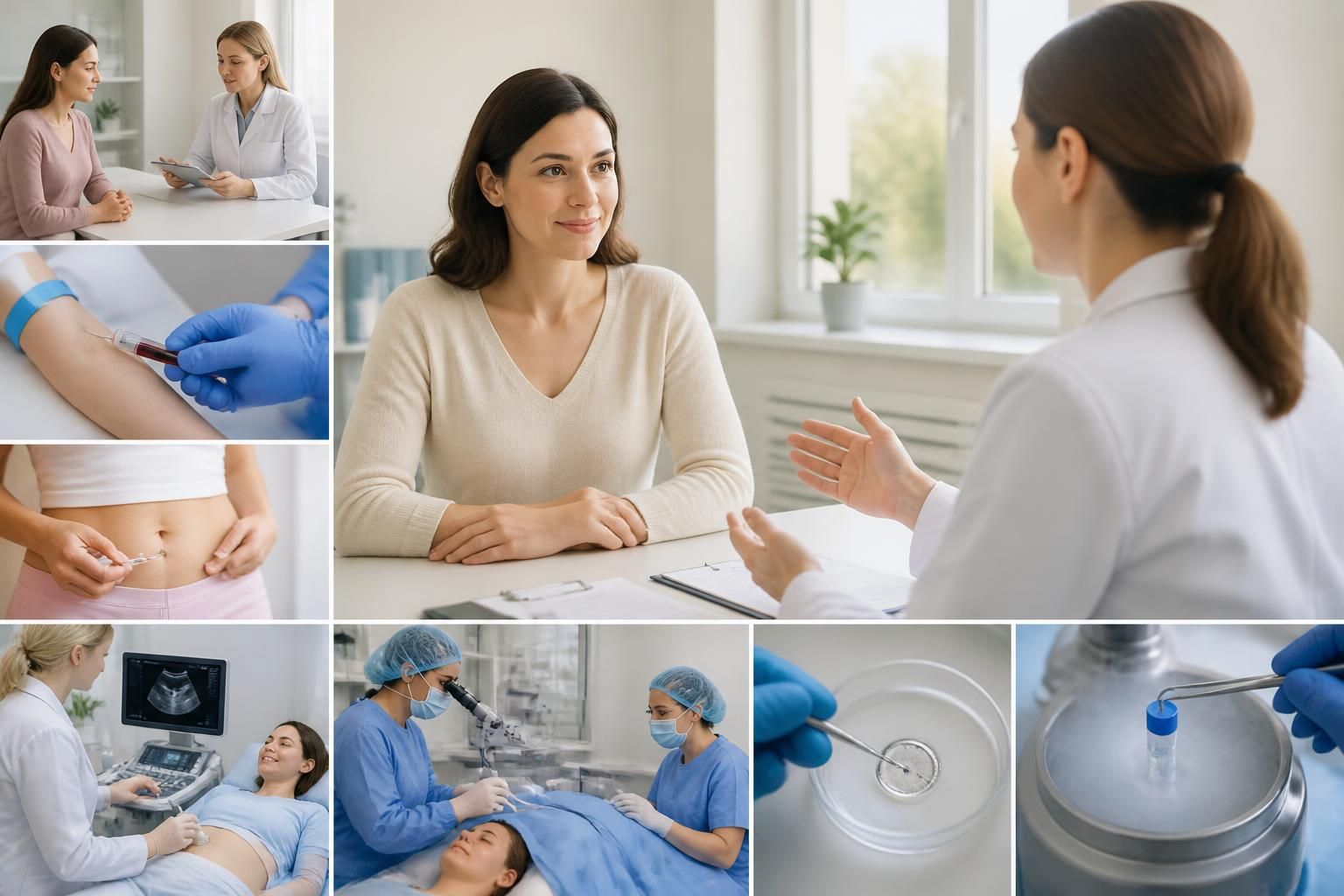
At a time when motherhood often means patience and reflection, egg freezing establishes itself as a true lever of autonomy for women who wish to preserve their fertility. This method, now accessible without medical reason between 29 and 37 years old, allows freezing eggs at an age when their quality is optimal, thus offering precious peace of mind against the vagaries of time. Between the medical steps, the benefits, and the precautions to take, discovering this process means seizing an opportunity to better control one’s family planning journey.
The article in brief
A journey into the heart of egg freezing: understanding to preserve female fertility with confidence and gentleness.
- Anticipate to succeed better: Ideal freezing before 35 years old to maximize oocyte quality
- Key protocol steps: Ovarian stimulation, follicular puncture, vitrification explained in detail
- Know the limits: Success rates vary according to age at retrieval and essential medical follow-up
- Choices after cryopreservation: Storage, use in ART, donation or cessation depending on personal projects
Offering female fertility a gesture of foresight is an act of hope and serenity for the future.
Understanding egg freezing as an ally in fertility preservation
In the soft light of a medical office, where every detail counts, egg freezing appears as a marked path towards deferred motherhood. Fertility preservation is no longer a notion reserved for purely medical reasons since the 2021 bioethics law, which broadened access to this procedure for women between 29 and 37 years old for personal convenience. This represents a major advance for those who wish to combine their life projects with their biological clock.
Beyond its technical aspect, oocyte freezing opens a window of freedom, a promise to be able to choose one’s own pace. The idea? To pause the ovarian reserve at a time when oocyte maturation guarantees better egg quality, ideally before 35 years old, to anticipate the natural decline that occurs with age.

The essential medical steps of egg freezing
The egg freezing procedure resembles a journey divided into several precise phases, where each moment is carefully prepared:
- Preliminary assessment: gynecological consultations, blood tests, and ultrasounds to evaluate the ovarian reserve and ensure a healthy context before starting the protocol.
- Ovarian stimulation: hormone administration for about ten days to stimulate oocyte production and maturation, often resulting in 10 to 20 mature eggs collected.
- Follicular puncture: collection of oocytes under local or general anesthesia, guided by ultrasound, in a hospital or specialized clinic.
- Vitrification: modern ultra-rapid freezing technique at -196°C, plunging oocytes into liquid nitrogen to preserve their quality for optimal cryopreservation.
This method, far more effective than the old slow freezing, ensures a high survival rate of oocytes. Rigorous medical follow-up and personalized support are essential to go through this period with confidence and peace of mind.
Ovarian stimulation and its implications in fertility preservation
Ovarian stimulation is a crucial but sometimes delicate step. It acts as an accelerator for oocyte maturation by mobilizing several follicles simultaneously. While this phase is generally well tolerated, it can cause temporary side effects: bloating, fatigue, mood changes… Ovarian hyperstimulation syndrome remains rare but requires increased vigilance. For all these reasons, it is essential to be surrounded by a attentive and available medical team.
Knowing when to freeze your eggs: key factors and statistics to know
Every woman is unique, but science warns about the progressive degradation of the oocyte reserve with age. At 30, the chances of a successful pregnancy from frozen eggs can approach 90%, compared to less than 50% after 40 years old. Like an old piece of furniture losing its shine little by little, oocyte quality deteriorates relentlessly. That is why anticipation remains the best ally.
For women considering this path, a personalized assessment becomes essential to determine the optimal moment. Egg freezing for non-medical reasons, accessible between 29 and 37 years old, offers an ideal window to project without excessive pressure, relying on expert fertility advice.
Costs to anticipate and managing the egg freezing project
The path to cryopreservation also involves a significant financial investment. One cycle can cost between 3,000 and 6,000 euros, including stimulation, puncture, and vitrification, with an annual storage cost of about 300 euros. Some patients choose to undergo this procedure abroad where prices may vary.
| Option | Initial cost (€) | Annual cost (€) |
|---|---|---|
| Simple freezing | 3,000 – 6,000 | 300 |
| Freezing with intensive hormone treatment | 5,000 – 10,000 | 500 |
| Freezing abroad | From 2,500 | Variable |
Facing this investment, transparency with the medical team is key to avoid any surprises and build a project tailored to one’s needs.
Options after cryopreservation: mastering your reproductive future
Once the eggs are stored, several paths can open up:
- Reuse in ART: if the desire for a child materializes, the eggs are thawed and then fertilized.
- Donation: either to other patients or to medical research, depending on legislation and personal choice.
- Stopping storage: a respected decision that can be made at any time after discussion.
- Extended storage: up to 45 years old, the limit set in France, offering a comfortable deadline to decide.
This range of options, unique to each journey, represents a form of harmony between one’s aspirations and scientific advances.
Practical advice to prepare well for your egg freezing
To approach this protocol with serenity, some practical tips are essential:
- Carry out a complete fertility assessment in order to properly frame the project.
- Favor performing the retrieval before 35 years old to optimize oocyte quality.
- Understand each step of the process and anticipate ovarian stimulation and follicular puncture.
- Accompany the process with psychological or family support according to needs.
- Maintain a healthy lifestyle: balanced diet, gentle physical activity, and stress management.
- Get informed about prices and conditions of specialized centers to make an informed choice.
- De-dramatize the protocol by surrounding yourself with professionals endowed with empathy and listening.
To discover why this procedure may be necessary for some, also consult the reasons that lead to freezing eggs.
Is it mandatory to have a medical reason to freeze your eggs?
Since the 2021 bioethics reform, egg freezing is accessible without medical justification, offering new freedom for family planning.
What is the ideal age to undergo ovarian stimulation before freezing?
It is recommended to proceed before 35 years old, the age when oocytes have the best quality to maximize chances of success later.
How long can eggs be stored under current conditions?
In France, freezing allows eggs to be stored until the age of 45, with appropriate medical follow-up.
What are the possible side effects of hormonal stimulation?
Common effects include bloating, fatigue, and slight mood variations, with a rare risk of hyperstimulation requiring medical monitoring.
What if I change my mind after freezing my eggs?
It is possible to stop storage or donate to others or research, always in agreement with the specialized center.