

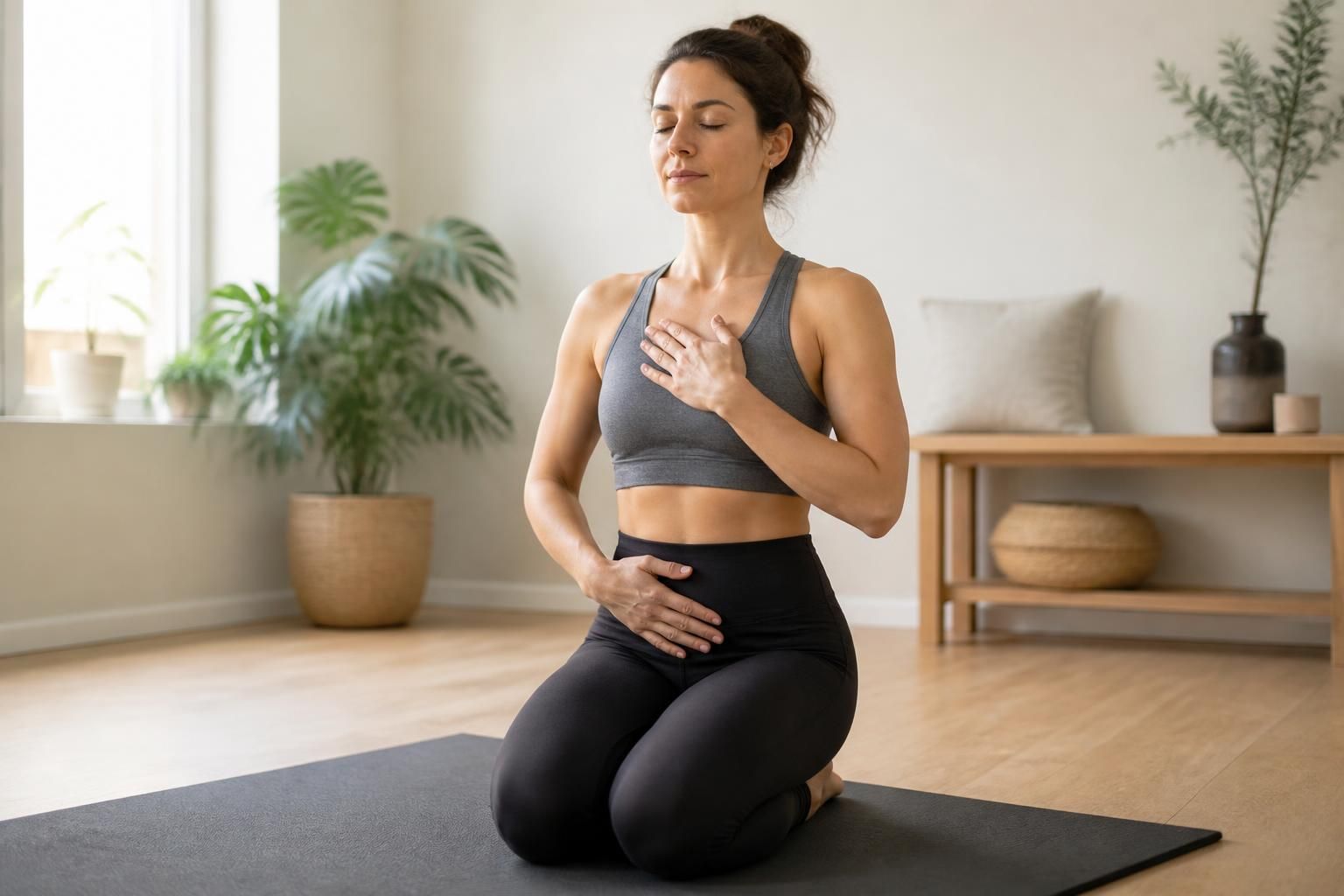
The perineum, this often overlooked group of muscles, plays a key role in female health. Supporting the pelvic organs, it contributes to continence and daily comfort. However, it can relax due to pregnancies, age, or chronic tension. Fortunately, simple, gentle, and accessible exercises, integrated into everyday life, allow for the recovery of lasting tone, the prevention of incontinence, and the improvement of intimate well-being without resorting to surgery.
The article in brief
A strengthened perineum is the key to daily female comfort. Discover why and how to exercise these essential muscles with simple and adapted movements.
- Understanding the perineum: Essential role for continence and pelvic support
- Perineal rehabilitation: Effective techniques to strengthen and loosen
- Practical exercises at home: Gentle and accessible sequences for all ages
- Body awareness: Adapting perineal exercises to one’s sensations for real well-being
Carefully following these tips helps to regain a toned perineum and lasting intimate balance.
Why strengthening the perineum is essential for female health
At the core of the pelvis, the perineum acts like a muscular hammock that holds the bladder, uterus, and rectum in place. This small invisible ally ensures continence by voluntarily closing the openings and contributes to trunk stability. However, it is often used without being consciously engaged until symptoms arise: urinary leaks, a feeling of pelvic heaviness, or even pain.
To be completely transparent, many women discover the importance of this muscle after childbirth or at menopause, when perineal tone naturally declines. Strengthening the perineum is not only about preventing troubles – it also offers true daily comfort, better pelvic breathing, and an improvement in intimate life. It is a gentle gymnastics, respectful of oneself, adaptable to each individual.

The muscles to know to fully understand the perineum
The perineum is made up of several key muscles:
- The levator ani: responsible for supporting the organs and posture.
- The ischiocavernosus muscles: participate in contraction during continence.
- The transverse perineal muscles: provide support and tone to the pelvis.
- The bulbospongiosus muscle: active in female sexual functions.
These muscles work together to ensure optimal muscle strengthening, essential for preventing incontinence and for lasting women’s well-being.
How perineal rehabilitation supports daily well-being
Rehabilitation is not a bad word: it consists of gently strengthening these muscles through targeted exercises, often prescribed postpartum or at menopause. The goal? To restore strength, flexibility, and control of the perineum, which helps avoid embarrassing situations like urinary leaks while reducing pain and feelings of heaviness.
It is important to note that early care can limit or even avoid surgery. Sessions with a specialized physiotherapist offer personalized follow-up, sometimes complemented by techniques such as electrostimulation or biofeedback. But for many, incorporating simple perineum exercises at home already makes a big difference.
The most common disorders requiring perineal strengthening
| Disorder | Description | Rehabilitation goal |
|---|---|---|
| Urinary incontinence | Leaks during effort, coughing or laughing | Strengthen voluntary contraction to better control the bladder |
| Anal incontinence | Involuntary loss of gas or stools | Tone the anal sphincter for greater control |
| Pelvic prolapse | Descent of pelvic organs causing heaviness | Lift and maintain organs in the correct position |
Taking care of your perineum means anticipating and resolving these discomforts often widespread in women, and doing so with simple and respectful gestures.
Simple exercises for regained perineal tone
Here are some gentle movements that any woman can practice regularly at home to support her perineum, without complicated equipment:
- Basic contraction (Kegel exercise): sitting or lying down, gently contract the perineum as if holding back the urge to urinate, hold for 5 seconds then release. Repeat 8 to 10 times.
- The perineal wave: progressively contract from the anus towards the lower belly then slowly release. Promotes muscle coordination.
- Quick contractions: several rapid contractions and releases to awaken tonic fibers.
- Conscious breathing: synchronize breathing with a gentle contraction, promoting both tone and relaxation.
- The little bridge: lying down, gently lift the pelvis engaging the perineum, then lower down vertebra by vertebra.
- Deep core: strengthen the core and abdominal belt by controlling breath and posture well.
- Single-leg half-bridge: a more dynamic variation to tone the perineum, glutes, and abs in balance.
These exercises, besides being effective, fit perfectly into a daily routine. To learn more and master these movements perfectly, discover our dedicated selection of perineum exercises that are adapted and safe.
Beyond strengthening, it is also about learning to listen to your body. Because it is not uncommon for a perineum to be too tight, causing pain or discomfort. In these cases, priority is relaxation and not excessive contraction.
Practical tips to succeed in your daily perineal gym
The key to successful rehabilitation lies in progressiveness and regularity. Here are some tips to integrate these exercises gently:
- Establish a routine: practice morning and evening, a few minutes is enough.
- Do not force: contraction must remain comfortable, without pain or unnecessary tension.
- Breathe deeply: synchronizing breath and movement helps release tension.
- Consult if in doubt: a health professional (physiotherapist or midwife) will help personalize the exercises.
While the temptation to use accessories like probes or cones can be great, it is advisable to be well informed and prefer medical supervision.
For those who want to explore a modern and connected approach to perineal strengthening, technology also offers innovative solutions like Perifit Pump, a digital coach for the perineum.
List of key recommendations for effective perineal activity
- Know and precisely locate your perineum before starting.
- Prioritize quality of contractions over quantity.
- Avoid holding your breath during exercises.
- Alternate between slow and fast contractions.
- Respect your sensations and do not force if uncomfortable.
How do I know if my perineum needs to be strengthened?
A simple test is to voluntarily stop the urine stream. The ability to feel and control this contraction is a good indicator. In case of symptoms such as leaks, see a specialist.
Can you strengthen your perineum without equipment?
Absolutely. Kegel exercises and other proposed movements are easy to do at home without accessories.
What are the risks of a too tight perineum?
A hypertonic perineum can cause pain, discomfort, or blockages. In this case, prioritize relaxation exercises and consult a professional.
How long does it take to see results?
It generally takes at least 3 months of regular exercises to perceive a clear improvement in perineal tone.
Can perineal rehabilitation avoid surgery?
Yes, early and consistent care often reduces the need for surgical intervention by naturally strengthening the pelvic floor muscles.


