What are the risks of chorizo during pregnancy

découvrez les risques potentiels liés à la consommation de chorizo pendant la grossesse et les précautions à prendre pour assurer la sécurité de la future maman et du bébé.

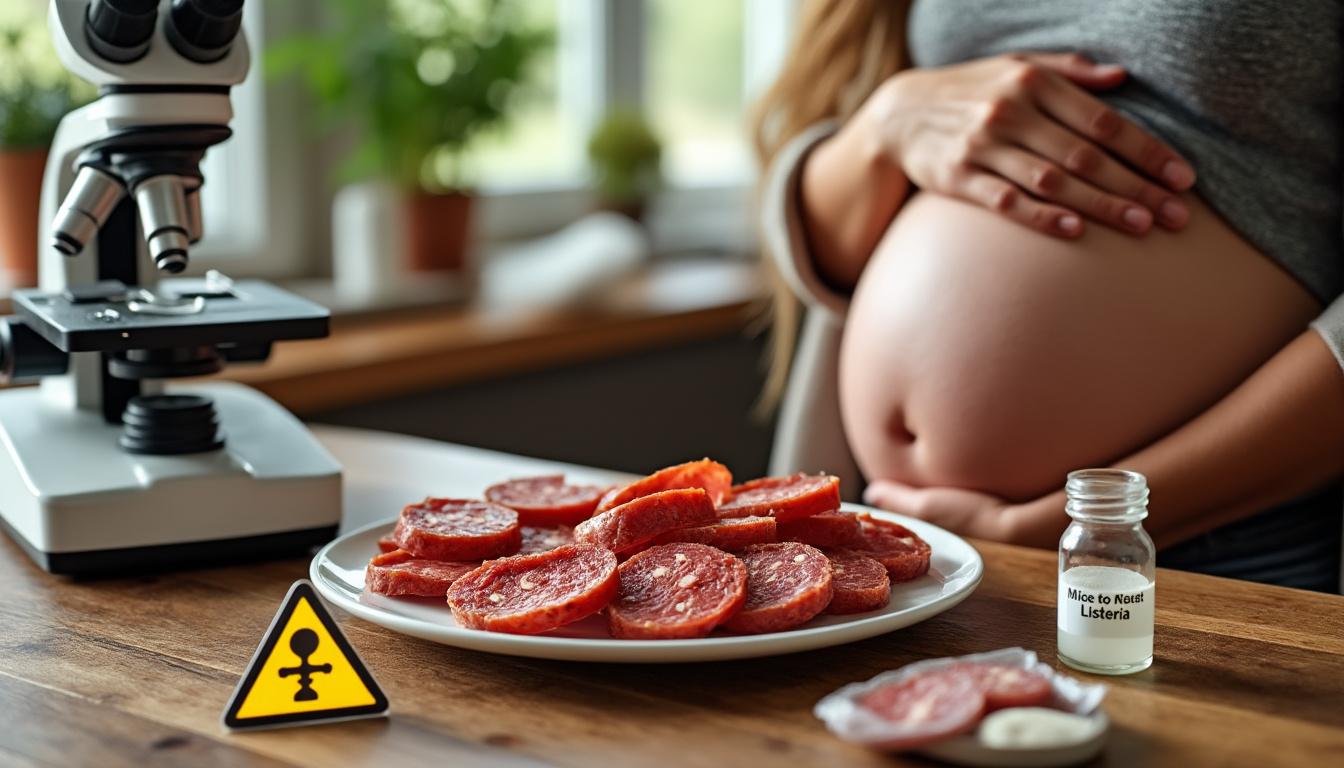
At the heart of pregnancy, every flavor carries the echo of a new vigilance. Chorizo, with its spicy aroma evoking the sunny markets of the South, sometimes slips into sudden cravings. Yet behind this apparent indulgence lie essential food risks to be aware of. Listeriosis, toxoplasmosis, dangers of raw cured meats: all words that call for delicate caution, blending pleasure and safety in this gentle fight for baby’s health.

The article in brief

Consuming chorizo during pregnancy raises many food safety questions, balancing infection risks and necessary precautions.

  • Main risks of raw chorizo: listeriosis and toxoplasmosis, dangers for the fetus
  • Strict cooking recommended: at least 70°C at the core to eliminate germs
  • Distinguish types of chorizo: pasteurized, fresh, dry, to avoid foodborne infections
  • Safe alternatives and recipes: cooked chorizo, cooked cold cuts, plant-based options

An informed approach transforms chorizo into controlled pleasure, between gourmet love and protective care.

Chorizo and pregnancy: understanding essential food risks

During an aperitif or a gourmet break, chorizo can charm the taste buds. But for a pregnant woman, this spicy charm may conceal a worrying shadow. Listeriosis, a sneaky infection caused by Listeria monocytogenes, particularly affects raw cured meats, even refrigerated ones. Although symptoms are often subtle in the mother, the fetus faces great dangers, with risks of miscarriage, premature birth, or severe infections.

Adding to this threat is toxoplasmosis, a sly parasite present in undercooked meats, dry or improperly prepared fresh chorizo. Its effects, sometimes irreversible, impact the brain, eyes, and overall development of baby. To this are added bacteria such as Salmonella or Escherichia coli, responsible for foodborne intoxications, which can disrupt pregnancy with severe digestive disorders.

Table of chorizo pathogens and their effects on pregnancy

Pathogen Effects on pregnancy Main source in chorizo
Listeria monocytogenes Miscarriage, prematurity, severe neonatal infection Raw or insufficiently cooked chorizo
Toxoplasma gondii Malformations, neurological disorders, growth delays Uncooked meat, dry or improperly prepared fresh chorizo
Salmonella, E. coli Food poisoning, diarrhea, vomiting Cold cuts contaminated by poor hygiene or cold chain breaks

Pregnant with chorizo: cooking, the key to prevention during pregnancy

If raw chorizo is frightening, well-cooked chorizo opens the door to guilt-free indulgence. Cooking at the core to at least 70°C maintained for 2 minutes represents an insurmountable barrier for bacteria and parasites. Classic methods — pan on high heat, oven at controlled temperature, slow-cooked dishes — then become safety rituals.

A lire aussi :  What does it mean to dream of being pregnant and how to interpret this dream

A culinary thermometer, a precious ally, ensures perfect internal temperature control. Conversely, microwave cooking, often uneven, should be avoided. Vigilance extends from product choice to how it is cooked; no shortcuts should be taken, so that spicy pleasures and serenity go hand in hand.

Guide to safe cooking times and methods for chorizo

Cooking method Temperature Approximate duration Advantages
Pan Medium-high heat 3-5 min per side Quick cooking, control of browning
Oven 180-200°C 10-15 min depending on thickness Even cooking, practical for thick pieces
Simmered (paella, stews) Prolonged temperature 10-20 min Slow cooking, optimal pathogen destruction

Different types of chorizo: a crucial choice for food safety

Choosing a chorizo suitable for pregnancy first requires knowing the nuances of the product. Pasteurized chorizo benefits from an industrial thermal treatment, guaranteeing the elimination of bacteria. It can be consumed cold or reheated without fear, provided the cold chain has been respected.

Fresh chorizo resembles raw meat that demands scrupulous cooking to cross the safety line. As for dry or raw chorizo, it forms the red zone that must be strictly avoided throughout pregnancy, regardless of its appearance.

Comparison of chorizo types during pregnancy

Type of chorizo Treatment Recommended consumption during pregnancy Key precautions
Pasteurized chorizo Industrial thermal treatment Yes, no mandatory cooking Respect cold chain, check label
Fresh chorizo Raw, non-pasteurized product Yes, mandatory cooking at 70°C at core Quality control, rigorous cooking, rapid consumption
Dry or raw chorizo Drying, smoking Forbidden during pregnancy Strictly avoid

Nutrition value of cooked chorizo: a useful contribution during pregnancy

Beyond its spices and strong character, well-cooked chorizo offers a good nutritional contribution. Rich in protein (12 to 15 g per 50 g serving), it supports fetal cellular growth and maternal health. Its vitamin B12 content promotes neurological development, while its easily absorbed iron helps counter pregnancy anemia, so frequent in this period.

A lire aussi :  How to choose indoor slippers for children?

However, its richness in saturated fats and salt requires moderate consumption (2 to 3 servings per week), especially since chorizo spices can exacerbate heartburn, commonly encountered during pregnancy.

Safe recipes and tasty alternatives for pregnant women

For those who want to combine safety and pleasure, several cooked chorizo-based preparations fit perfectly with a calm pregnancy: slow-cooked paella where chorizo releases its aroma at controlled temperature, pizza with well-grilled chorizo, or even scrambled eggs incorporating cooked chorizo cubes for an energizing breakfast.

Plant-based alternatives, now increasingly popular, offer a taste close to the original flavor, without sanitary threat. Plant-based chorizo brands, rich in protein, provide a gourmet and responsible answer. Finally, cooked cold cuts like cooked ham or turkey remain valuable allies to diversify flavors safely.

Delicious suggestions to consume chorizo safely

  • Simmered paella: prolonged cooking at core >70°C
  • Toasted slices: well-browned chorizo in oven or pan
  • Chorizo omelette: add pieces at the end of cooking
  • Plant-based chorizo: ready-to-eat natural substitute
  • Cooked cold cuts: cooked ham or turkey

Test your knowledge about chorizo during pregnancy

/* Interactive quiz in French about chorizo risks during pregnancy. Includes 3 multiple-choice questions, immediate correction after submission. Technology: pure HTML + JS and TailwindCSS via CDN. */ // Quiz data (French texts) const quizData = { title: “Testez vos connaissances sur le chorizo pendant la grossesse”, questions: [ { question: “Peut-on manger du chorizo cru pendant la grossesse ?”, answers: [ “Oui, sans risque”, “Non, c’est déconseillé car il peut contenir des bactéries”, “Oui, mais seulement si le chorizo est bien épicé”, “Uniquement si on le cuit avant consommation” ], correctIndex: 1 }, { question: “Quels risques le chorizo cru peut-il poser à une femme enceinte ?”, answers: [ “Risques de toxoplasmose et listériose”, “Aucun risque particulier”, “Risques d’intolérance au gluten”, “Une simple indigestion passagère” ], correctIndex: 0 }, { question: “Que faut-il faire pour consommer du chorizo en toute sécurité pendant la grossesse ?”, answers: [ “Le consommer cru en petite quantité”, “Éviter totalement le chorizo”, “Le cuire suffisamment pour éliminer les risques”, “Laver le chorizo avant consommation” ], correctIndex: 2 } ] }; // References to form, buttons, and result const quizForm = document.getElementById(‘quizForm’); const submitBtn = document.getElementById(‘submitQuiz’); const restartBtn = document.getElementById(‘restartQuiz’); const quizResult = document.getElementById(‘quizResult’);
A lire aussi :  Lanolin breastfeeding: why this cream remains a precious ally for breastfeeding moms
// Function to build quiz elements in the DOM function buildQuiz { quizForm.innerHTML = ”; // Clear if already present quizData.questions.forEach((q, qIndex) => { const fieldset = document.createElement(‘fieldset’); fieldset.className = ‘border border-gray-300 p-4 rounded’; fieldset.setAttribute(‘aria-describedby’, `question-${qIndex}-desc`); const legend = document.createElement(‘legend’); legend.id = `question-${qIndex}`; legend.className = ‘font-semibold mb-2’; legend.textContent = `Q${qIndex + 1}. ${q.question}`; fieldset.appendChild(legend); const desc = document.createElement(‘p’); desc.id = `question-${qIndex}-desc`; desc.className = ‘sr-only’; desc.textContent = ‘Choose one answer from the following options’; fieldset.appendChild(desc); q.answers.forEach((answer, aIndex) => { const answerId = `q${qIndex}a${aIndex}`; const div = document.createElement(‘div’); div.className = ‘mb-1’; const input = document.createElement(‘input’); input.type = ‘radio’; input.name = `question${qIndex}`; input.id = answerId; input.value = aIndex; input.className = ‘mr-2 focus:ring-red-500 cursor-pointer’; const label = document.createElement(‘label’); label.setAttribute(‘for’, answerId); label.className = ‘cursor-pointer select-none’; label.textContent = answer; div.appendChild(input); div.appendChild(label); fieldset.appendChild(div); }); quizForm.appendChild(fieldset); }); } // Function to check answers and display result function checkAnswers { let score = 0; const total = quizData.questions.length; const formData = new FormData(quizForm); // Check that all questions have an answer for (let i=0; i < total; i++) { if (!formData.has(`question${i}`)) { alert(`Please answer question ${i + 1} before submitting.`); return null; // interrupt validation } } // Calculate score for (let i=0; i < total; i++) { let userAnswer = parseInt(formData.get(`question${i}`), 10); if(userAnswer === quizData.questions[i].correctIndex) { score++; } } return score; } // Function to visually show corrections function showCorrections { const total = quizData.questions.length; const formData = new FormData(quizForm); for (let i=0; i { input.disabled = true; const label = questionFieldset.querySelector(`label[for=”${input.id}”]`); label.classList.remove(‘bg-green-100′,’bg-red-100′,’text-green-800′,’text-red-800’); if (parseInt(input.value, 10) === correctIndex) { label.classList.add(‘bg-green-100′,’text-green-800′,’font-semibold’,’rounded’); // Add aria-label to the correct answer input.setAttribute(‘aria-checked’, ‘true’); } }); // Mark the user’s wrong choice if any const userChoice = parseInt(formData.get(`question${i}`), 10); if(userChoice !== correctIndex) { const wrongLabel = questionFieldset.querySelector(`label[for=”q${i}a${userChoice}”]`); if(wrongLabel) { wrongLabel.classList.add(‘bg-red-100′,’text-red-800′,’line-through’,’rounded’); // Mark aria for error questionFieldset.querySelector(`input[value=”${userChoice}”]`).setAttribute(‘aria-checked’, ‘false’); } } } } // Initialization – build quiz at load buildQuiz; // Submit button handling submitBtn.addEventListener(‘click’, => { const score = checkAnswers; if(score === null) return; // If validation incomplete showCorrections; quizResult.textContent = `You scored ${score} out of ${quizData.questions.length} correct answers.`; // Disable submit button, enable restart submitBtn.disabled = true; submitBtn.classList.add(‘opacity-50’, ‘cursor-not-allowed’); restartBtn.classList.remove(‘hidden’); }); // Restart button handling restartBtn.addEventListener(‘click’, => { // Rebuild quiz buildQuiz; quizResult.textContent = ”; submitBtn.disabled = false; submitBtn.classList.remove(‘opacity-50’, ‘cursor-not-allowed’); restartBtn.classList.add(‘hidden’); submitBtn.focus; });
{“@context”:”https://schema.org”,”@type”:”FAQPage”,”mainEntity”:[{“@type”:”Question”,”name”:”Can you eat raw chorizo while pregnant?”,”acceptedAnswer”:{“@type”:”Answer”,”text”:”No, raw or dry chorizo is strongly discouraged during pregnancy due to major risks of listeriosis and toxoplasmosis.”}},{“@type”:”Question”,”name”:”What temperature must cooked chorizo reach to be safe?”,”acceptedAnswer”:{“@type”:”Answer”,”text”:”Cooking must reach 70°C at the core maintained at least 2 minutes to ensure elimination of pathogens.”}},{“@type”:”Question”,”name”:”Is pasteurized chorizo safe during pregnancy?”,”acceptedAnswer”:{“@type”:”Answer”,”text”:”Yes, thermal treatment eliminates bacteria, allowing consumption without additional cooking.”}},{“@type”:”Question”,”name”:”What are the risks of listeriosis for the baby?”,”acceptedAnswer”:{“@type”:”Answer”,”text”:”Listeriosis can cause miscarriages, premature births, or severe infections in the newborn.”}},{“@type”:”Question”,”name”:”Are there alternatives to traditional chorizo?”,”acceptedAnswer”:{“@type”:”Answer”,”text”:”Yes, plant-based chorizos and cooked cold cuts like cooked ham offer safe and tasty options.”}}]}

Can you eat raw chorizo while pregnant?

No, raw or dry chorizo is strongly discouraged during pregnancy because of the major risks of listeriosis and toxoplasmosis.

What temperature must cooked chorizo reach to be safe?

Cooking must reach 70°C at the core maintained at least 2 minutes to guarantee elimination of pathogens.

Is pasteurized chorizo safe during pregnancy?

Yes, thermal treatment eliminates bacteria, allowing consumption without additional cooking.

What are the risks of listeriosis for the baby?

Listeriosis can cause miscarriages, premature births, or severe infections in the newborn.

Are there alternatives to traditional chorizo?

Yes, plant-based chorizos and cooked cold cuts like cooked ham offer safe and tasty options.

Auteur/autrice

  • Mama Twins

    Mama Twins parle de la vraie vie de famille, celle où l'amour se conjugue souvent au double. Nous y partageons des conseils de parentalité, des idées d'organisation, des sorties et des astuces pour accompagner les enfants, des premiers mois aux années d'école.

Leave a Comment

Your email address will not be published. Required fields are marked *

Scroll to Top